





Supply chain documentation is not just paperwork—it’s a critical pillar of honey traceability management. For food manufacturers, importers, and retailers operating under frameworks like the Food Safety Modernization Act, EU Food Law, or Gulf regulations, traceability is both a legal requirement and a commercial safeguard.
When an auditor asks, “Where did this honey come from?”, the answer must be precise, documented, and instantly accessible—not based on guesswork.
This article explains how Delee Honey’s honey traceability management system works, what documentation is generated at each stage, and how it supports your compliance processes.
⚠️ Why Honey Traceability Management Is More Complex Than You Think
Honey presents unique challenges that make honey supply chain traceability more demanding than many other food products:
🍯 Blending Risks
Honey is often blended across origins, batches, or floral types to meet pricing or specification targets. Without a structured honey batch tracking system, traceability can quickly break down after blending—especially when documentation is incomplete or inconsistent.
🔍 Adulteration Concerns
Issues like C4 sugar adulteration and origin mislabeling are well documented in global trade. According to the 国連食糧農業機関, transparency in agricultural supply chains is becoming a key requirement for international trade credibility. Strong honey traceability documentation creates an auditable chain that makes fraud significantly harder to conceal.
🌍 Regulatory Pressure
Different markets impose strict requirements:
- EU Honey Directive
- Food Sanitation Act
- Gulf Cooperation Council food labeling standards
Buyers importing into these regions must rely on suppliers with robust honey traceability management systems.
🌱 Delee’s Farm-Level Documentation: Where Traceability Begins
Effective honey traceability management starts at the source—the farm.
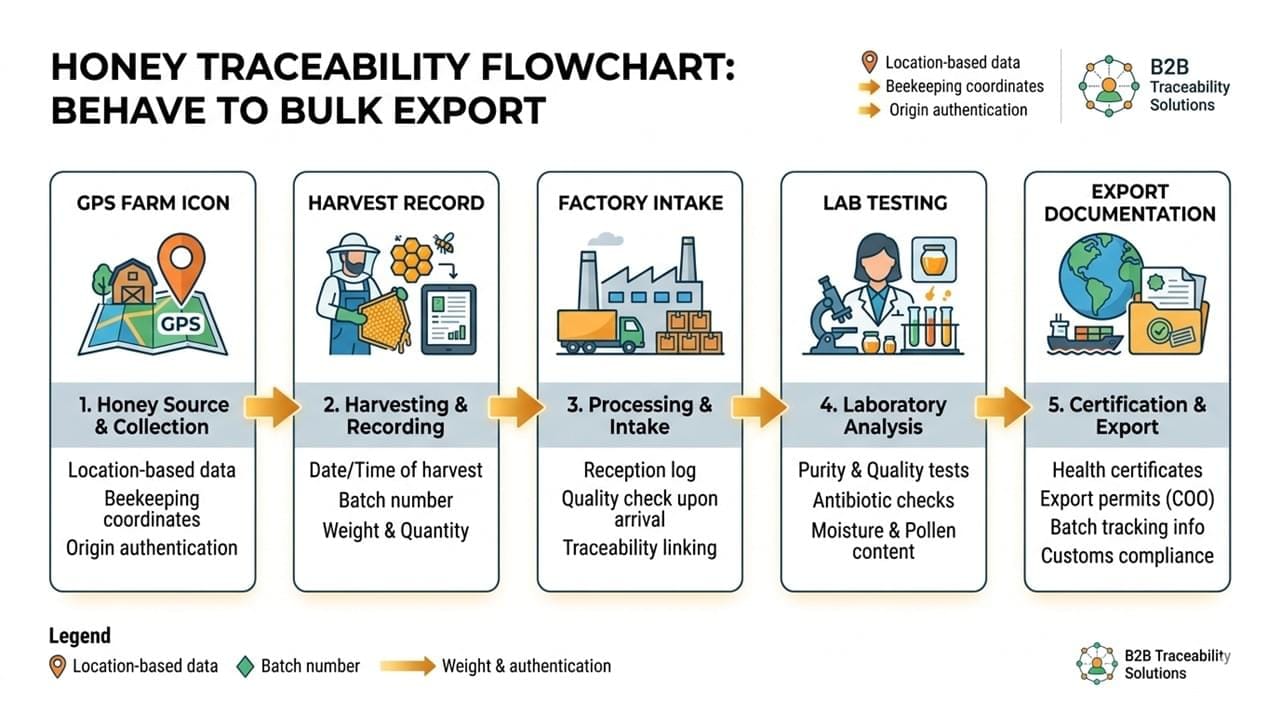
At Delee, farm coordinators collect and verify key batch data:
- 📍 Farm ID:Linked to GPS coordinates and beekeeper profile
- 📅 Harvest Date:Defined extraction timeframe
- 🌸 Floral Source:Verified against bloom calendars
- 💧 Moisture Level:Refractometer tested (≤20%)
This dataset forms the foundation of reliable honey traceability documentation.
👉 For a deeper look at sourcing, see our internal guide: Chinese Honey Sourcing Guide

🏭 Intake Inspection & Lot Assignment
Upon arrival, each batch enters the next stage of the honey batch tracking system:
- 👁️ Visual inspection (color & clarity)
- 💧 Moisture verification
- 👃 Organoleptic testing
- 🔢 Unique lot number assignment
Each lot becomes the backbone of honey traceability management, linking farm data to processing records.
📊 Processing Stage: Mid-Chain Honey Traceability Management
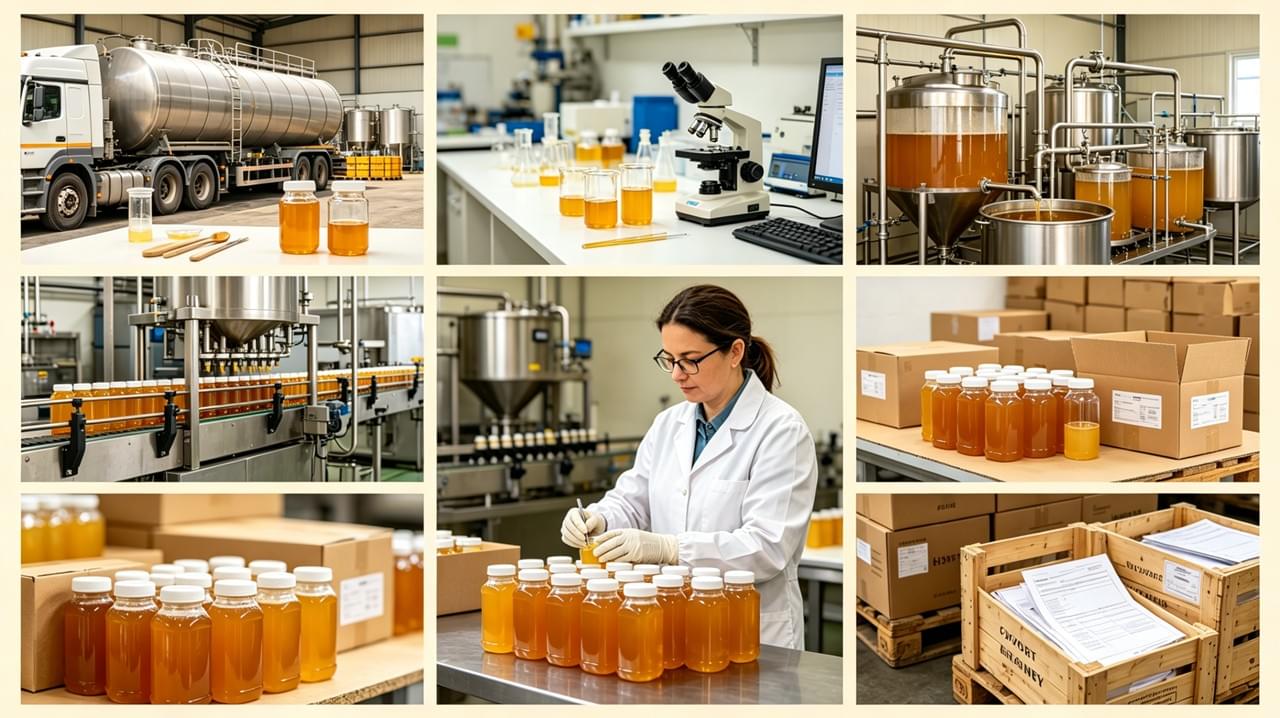
Inside the facility, Delee maintains detailed documentation across every stage to ensure full honey supply chain traceability:
| Stage | ドキュメンテーション |
| 濾過 | Filter specs, temperature, timestamps |
| Moisture Reduction | Before/after readings, equipment ID |
| Blending | Input lot numbers, ratios |
| Quality Testing | Internal + third-party lab reports |
| Filling | Line ID, packaging batch codes |
👉 Even blended products retain full backward traceability to individual farm sources.
For related quality systems, see: Bee Farms Overview

📦 What Documentation Buyers Receive
Delee provides a complete honey traceability documentation package:
- 📜 Certificate of Origin
- 🧾 Health Certificate
- 🧪 Third-party lab reports
- 🔗 Batch traceability summary
- 📄 Product specification sheet
Independent testing standards often align with organizations like ISO, ensuring globally recognized quality benchmarks.
✅ Supporting Global Compliance Requirements
デリーの honey traceability management system is designed to support:
- 🇺🇸 FSMA Supplier Verification (see U.S. Food and Drug Administration guidance)
- 🌍 BRCGS / IFS standards
- 🇪🇺 EU Honey Directive compliance
- 🕌 Halal certification traceability
We provide customized documentation packages aligned with your regulatory and audit requirements.
📈 The Bottom Line for Procurement Teams
A strong honey traceability management system delivers:
- ✔️ Faster audit responses
- ✔️ Reduced compliance risk
- ✔️ Improved labeling accuracy
- ✔️ Full supply chain transparency
In today’s global market, traceability is not optional—it’s a competitive advantage.
🔗 Next Steps
👉 Request our full traceability documentation package
For further reading: