






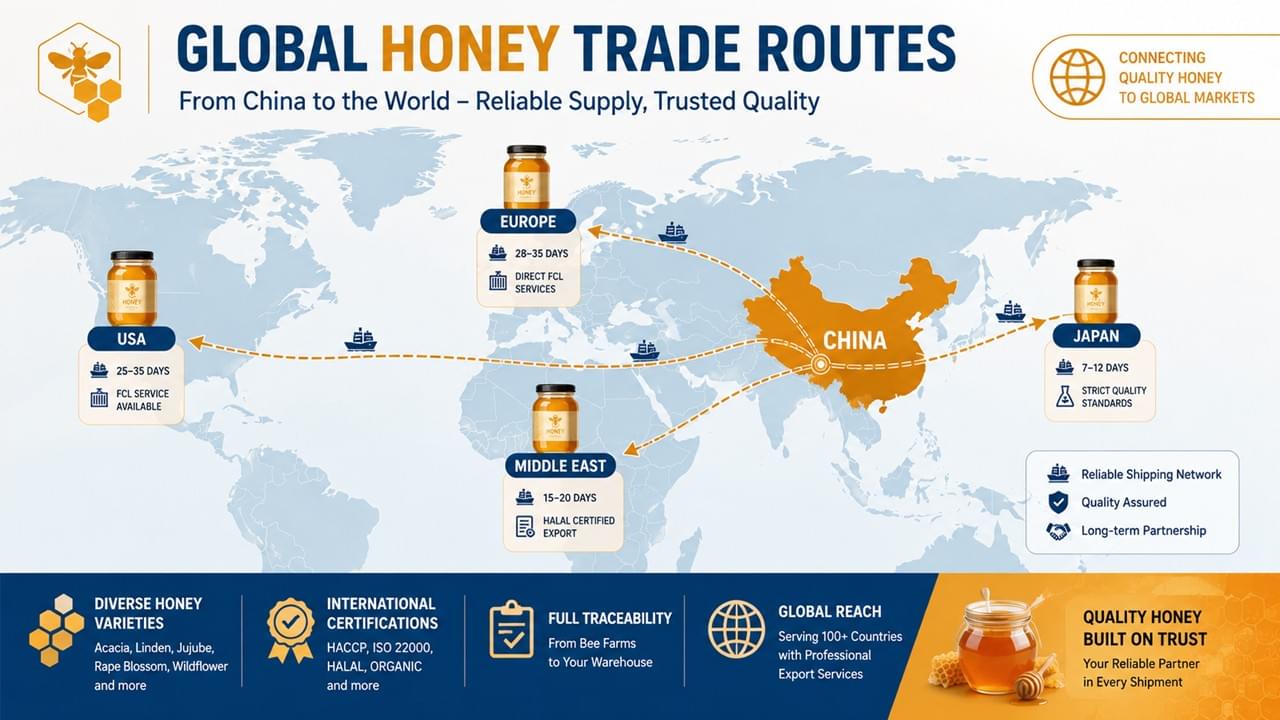
A China abriga algumas das pessoas mais influentes do mundo. Fornecedores de mel chineses, Atendemos fabricantes de alimentos, distribuidores, marcas próprias e importadores em mercados globais. Embora a indústria de mel da China frequentemente atraia atenção, equipes de compras experientes entendem que o sucesso no fornecimento depende da transparência do fornecedor, dos padrões de teste, da capacidade de exportação e da confiabilidade a longo prazo — e não apenas do país de origem.
Para compradores internacionais que avaliam o fornecimento de mel da China para fins B2B, a verdadeira questão não é se a China consegue fornecer mel em grande escala. A questão é quais fornecedores conseguem atender consistentemente aos exigentes padrões internacionais, mantendo preços competitivos e um desempenho de entrega estável.
Neste artigo, exploramos as vantagens estruturais por trás do domínio da China no comércio global de mel e as etapas críticas de due diligence que os compradores profissionais devem seguir antes de selecionar um fornecedor.
🌍 Por que os fornecedores chineses de mel lideram a produção global
Nenhum outro país se compara à escala de produção e à diversidade floral oferecidas pela produção moderna. Fornecedores de mel chineses. A China produz mais de 450 mil toneladas métricas de mel anualmente, graças a regiões apícolas geograficamente diversas e a longas temporadas de colheita.
Para as equipes globais de compras, isso cria diversas vantagens estratégicas:
- ✅ Fornecimento estável e em grande volume em diversas regiões de colheita
- ✅ Disponibilidade em escala comercial de variedades monoflorais e poliflorais
- ✅ Fornecimento flexível ao longo do ano
- ✅ Risco reduzido de perturbações climáticas localizadas
Entre as variedades de mel mais populares para exportação, destacam-se o mel de acácia, o mel de tília, o mel de jujuba, o mel de colza e o mel de flores silvestres. Essa ampla gama de produtos permite que os importadores consolidem o fornecimento por meio de um único fornecedor chinês de mel confiável, em vez de gerenciar múltiplas origens.
Países como a Argentina e a Ucrânia continuam sendo fortes concorrentes para certas variedades de mel floral, particularmente o mel de acácia. No entanto, poucas origens conseguem oferecer a combinação de escala, infraestrutura de processamento e disponibilidade durante todo o ano que a China possui.
Para compradores que exploram estratégias de fornecimento diversificadas, a visão geral do mercado global de mel publicada pela Organização das Nações Unidas para a Alimentação e a Agricultura (FAO) fornece dados comerciais valiosos e informações sobre a produção por meio dos Dados de Produção de Mel da FAOSTAT.
💰 Fornecedores de mel chinês com preços competitivos
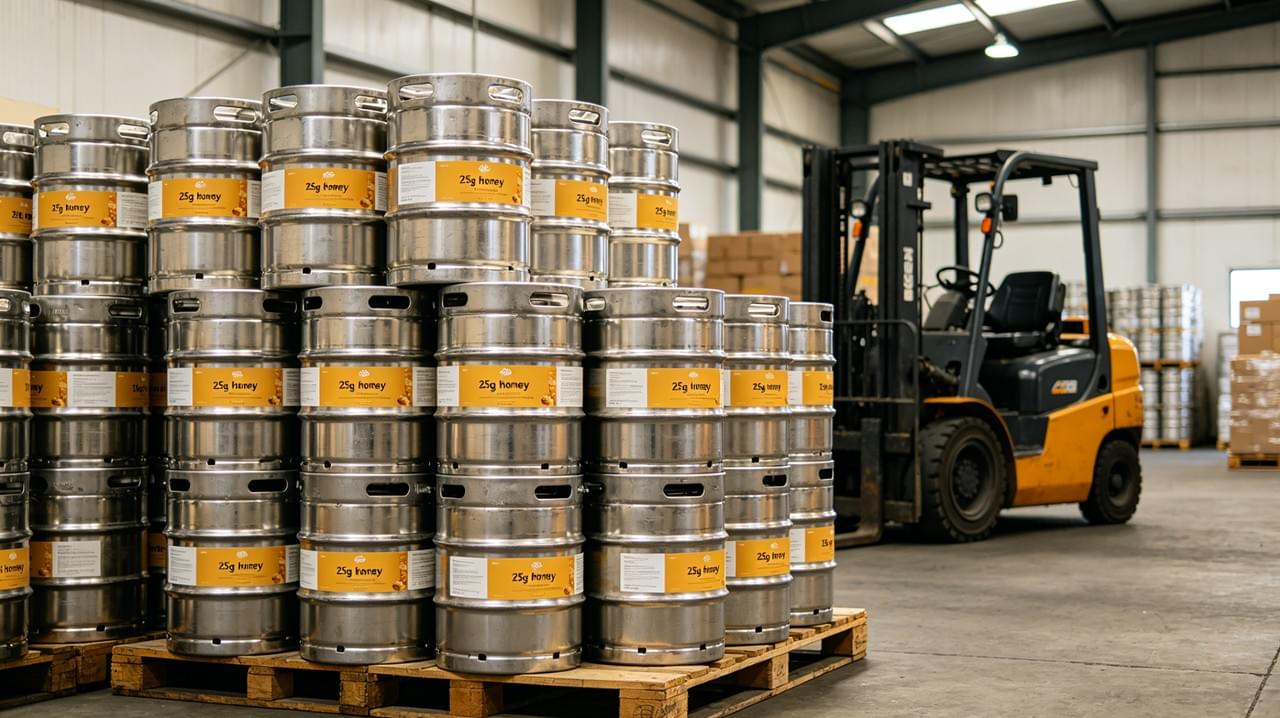
Um dos motivos pelos quais muitos compradores internacionais continuam a trabalhar com Fornecedores de mel chineses é a relação custo-benefício. Comparado com muitos tipos de mel de origem europeia e norte-americana, o mel chinês mantém preços competitivos devido a diversos fatores estruturais:
- Redução dos custos de mão de obra na produção primária
- Aglomerados densos de agricultura e processamento
- Transporte terrestre eficiente para portos de exportação
- Operações de processamento e embalagem em grande escala
No entanto, gestores de compras experientes sabem que o preço por si só nunca define o valor.
O mel que não atende aos padrões de umidade, contém níveis excessivos de HMF ou não passa nos testes de autenticidade torna-se um passivo dispendioso, independentemente do preço de compra. Portanto, decisões inteligentes de fornecimento priorizam o custo total da aquisição, e não apenas o valor da fatura.
Compradores profissionais normalmente avaliam:
- Despesas de controle de qualidade recebidas
- Requisitos de testes de terceiros
- Carga de trabalho de documentação de conformidade
- Riscos alfandegários potenciais
- Capacidade de resposta do fornecedor durante reclamações ou auditorias
Por isso, a aquisição de mel da China por compradores B2B favorece cada vez mais fornecedores com sistemas de documentação robustos e certificações reconhecidas internacionalmente.
🏆 Fornecedores de mel chinês e certificações internacionais
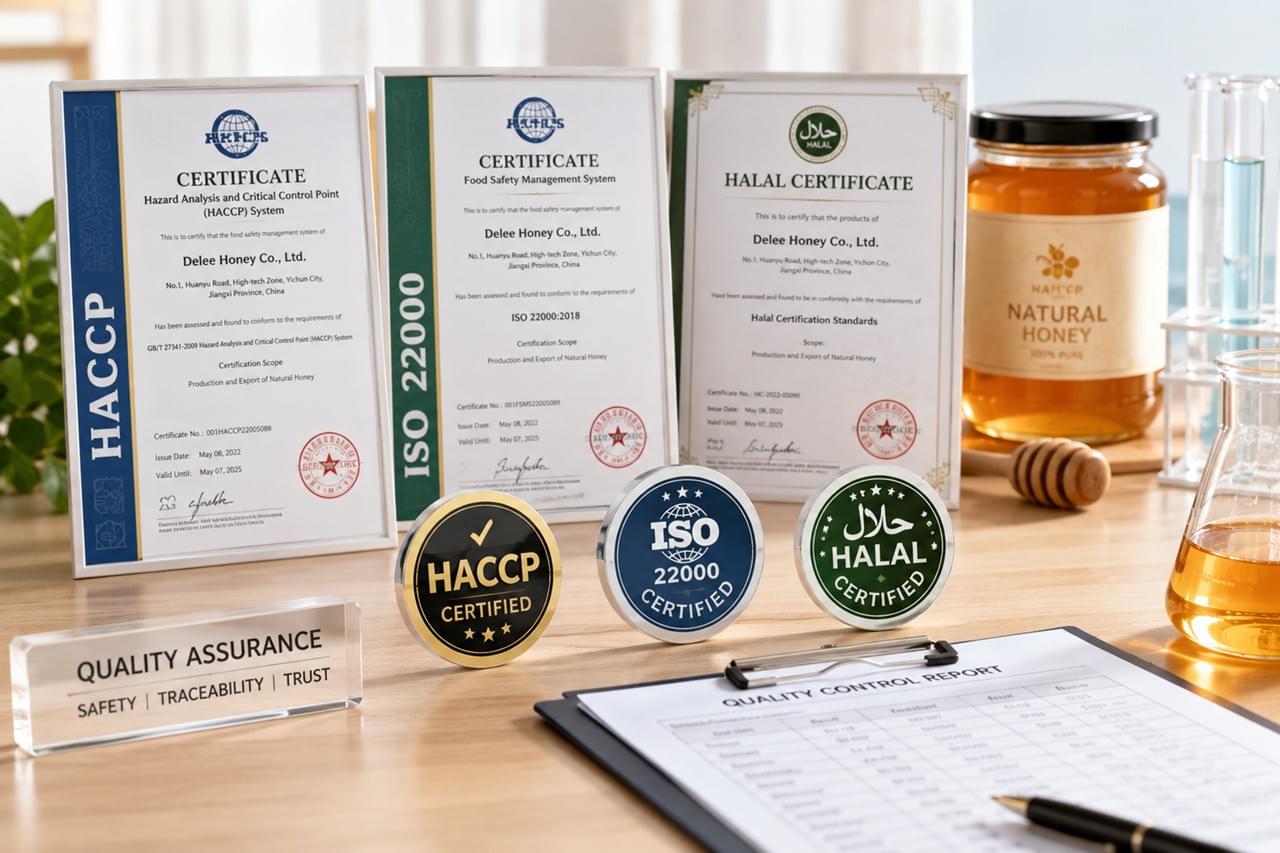
Principal Fornecedores de mel chineses Nos últimos dez anos, muitos exportadores aprimoraram significativamente seus sistemas de segurança alimentar e gestão de exportações. Atualmente, operam sob rigorosos mecanismos de supervisão e certificação, concebidos para mercados regulamentados.
As certificações comuns incluem:
- ✅ Certificação HACCP
- ✅ Gestão de segurança alimentar ISO 22000
- ✅ Certificação HALAL
- ✅ Certificação orgânica para os mercados da UE e do USDA
Essas certificações são especialmente importantes para importadores que fornecem produtos para supermercados, fabricantes de alimentos e marcas próprias.
Para compradores que visam os mercados do Golfo ou segmentos de consumidores muçulmanos, a conformidade com o HALAL tornou-se essencial. Organizações como o Conselho Islâmico de Alimentos e Nutrição da América (IFANCA) oferecem referências de certificação reconhecidas internacionalmente por meio do site oficial do IFANCA.
Ao mesmo tempo, os compradores devem lembrar que as certificações apoiam a qualificação do fornecedor, mas não substituem a verificação independente. Padrões rigorosos de qualidade para exportação de mel da China devem sempre incluir testes laboratoriais, revisão de rastreabilidade e auditorias de fornecedores.
🚢 Fornecedores chineses de mel se beneficiam de logística de exportação avançada
A infraestrutura de exportação da China continua sendo uma das maiores vantagens disponíveis para os compradores globais de mel.
Os principais portos, incluindo o Porto de Xangai, o Porto de Qingdao, o Porto de Guangzhou e o Porto de Tianjin, oferecem suporte ao transporte marítimo internacional de contêineres de forma eficiente e a uma ampla cobertura de rotas globais.
Os prazos típicos de deslocamento incluem:
- 🌍 Europa: 28–35 dias
- 🌍 Oriente Médio: 15 a 20 dias
- 🌍 Japão e Coreia do Sul: 7 a 12 dias
- 🌍 Estados Unidos: Variável, dependendo do processamento da FDA.
Os fornecedores de mel chineses experientes estão familiarizados com:
- Procedimentos de notificação prévia da FDA
- conformidade com os resíduos da UE
- Documentação de exportação Halal
- Requisitos de documentação aduaneira
- Otimização do carregamento de contêineres
Para compradores que gerenciam promoções sazonais ou cronogramas de produção, uma coordenação de envio confiável costuma ser tão importante quanto o preço do produto.
🔍 5 perguntas essenciais a fazer aos fornecedores de mel chineses
A diferença entre exportadores de alta qualidade e fornecedores com baixo nível de conformidade pode ser substancial. Antes de aprovar qualquer coisa, é fundamental verificar cuidadosamente os requisitos de conformidade. Fornecedores de mel chineses, As equipes de compras devem realizar uma due diligence estruturada.
As principais questões incluem:
1️⃣ O fornecedor pode fornecer testes de autenticidade de terceiros?
Solicite relatórios atuais de adulteração de açúcar IRMS ou SCIRA C4 de laboratórios acreditados.
2️⃣ Os relatórios sobre resíduos de pesticidas são abrangentes?
Um painel completo de múltiplos resíduos é muito mais confiável do que testes limitados a um único item.
3️⃣ É possível verificar as alegações de origem floral?
A análise melissopalinológica do pólen ajuda a confirmar a autenticidade monofloral.
4️⃣ O acesso para auditoria de fábrica está disponível?
Exportadores profissionais devem permitir auditorias programadas e inspeções de instalações.
5️⃣ O fornecedor mantém a rastreabilidade do lote?
A documentação de rastreabilidade ao nível da exploração agrícola é cada vez mais exigida pelos sistemas globais de segurança alimentar.
Os fornecedores capazes de atender a todos os cinco requisitos geralmente operam no nível superior da indústria de exportação de mel da China.
Para obter orientações adicionais, os importadores podem consultar os princípios internacionais de segurança alimentar publicados pela Comissão do Codex Alimentarius através do site [inserir link aqui]. Padrão Codex para Mel.
🍯 Delee Honey: Apoio a Compras B2B Profissionais
Na Delee Honey, nossos sistemas são construídos especificamente para atender aos requisitos de compras internacionais. Entendemos que os compradores modernos precisam de mais do que preços competitivos — eles precisam de documentação precisa, consistência na qualidade e suporte ágil para exportação.
Nossos serviços para compradores globais incluem:
- ✅ Rastreabilidade completa, da fazenda ao embarque
- ✅ Relatórios de laboratório terceirizados para pedidos comerciais
- ✅ Acesso à auditoria de fábrica durante a qualificação
- ✅ MOQ flexível e soluções de embalagem
- ✅ Suporte para requisitos de conformidade da UE, EUA, Golfo e Ásia
Para as equipes de compras que avaliam um fornecedor chinês de mel confiável para importadores, nosso objetivo é simplificar a qualificação, ao mesmo tempo que apoiamos a estabilidade do fornecimento a longo prazo.
👉 Comece sua avaliação de fornecedores com Delee querida →
👉 Saiba mais sobre nossa base de produção em Fazendas de abelhas seção
👉 Analise nossa estrutura de certificação no Pilar 2
Você também pode explorar informações sobre o mercado internacional de mel no Centro de Comércio Internacional por meio das Ferramentas de Análise de Mercado do ITC.
✨ Considerações finais
A posição da China no comércio global de mel se baseia em escala, infraestrutura, diversidade floral e capacidade de exportação. No entanto, o sucesso no fornecimento depende da escolha do parceiro certo — um com sistemas de teste transparentes, rastreabilidade confiável e gestão de conformidade robusta.
Para compradores profissionais, o melhor Fornecedores de mel chineses Não são simplesmente fornecedores de baixo custo. São parceiros de longo prazo na cadeia de suprimentos, capazes de garantir a segurança alimentar, a qualidade consistente e o crescimento no mercado internacional.