










The global functional food market is shifting. Today, consumers and brand developers expect far more from natural sweeteners than just a sweet taste. Honey occupies a unique position in this changing landscape: it delivers a rich, satisfying sweetness while carrying a documented profile of functional properties that offer distinct honey health benefits.
For food manufacturers, health brand developers, and bulk buyers formulating for health-conscious consumers, understanding these properties is vital. Let’s look at the hard science behind what makes bee products a premium ingredient choice.
🍯 Beyond Sweetness: The Bioactive Matrix
At its core, raw honey is a supersaturated carbohydrate solution, mostly made of fructose and glucose. However, the real value for food formulators lies in the remaining 1% to 2% of its composition. This trace matrix is packed with complex honey bioactive compounds that refined sugars simply do not possess:
- Active Enzymes: Diastase, invertase, and glucose oxidase.
- Polyphenols & Flavonoids: Natural plant-derived antioxidants.
- Organic Acids: Primarily gluconic acid, which shapes honey’s pH.
- Micronutrients: Essential amino acids, B-complex vitamins, and vital minerals like potassium, zinc, and iron.
The concentration of these trace compounds changes based on floral origin, harvest timing, and processing methods. Minimally processed raw honey keeps these sensitive elements completely intact. In contrast, heavy pasteurization or ultra-filtration strips away the very functional character that premium brands look for.
🔬 5 Core Honey Health Benefits Backed by Science
1. Natural Preservative and Antimicrobial Power
One of the most valuable honey health benefits is its natural antimicrobial activity. When honey interacts with moisture, an enzyme called glucose oxidase converts glucose into hydrogen peroxide. This creates a natural defense mechanism. Combined with honey’s high osmotic pressure and low pH (3.5–4.5), this property acts as a clean-label microbial inhibitor, helping product developers extend shelf life naturally without relying on synthetic additives.
2. Deep Antioxidant Support
The rich honey bioactive compounds—specifically flavonoids like quercetin and kaempferol—provide measurable antioxidant defense. These compounds neutralize free radicals, making honey a highly functional addition to wellness beverages and healthy snacks.
- Darker varieties (like Buckwheat or Jujube) offer the highest antioxidant levels.
- Lighter varieties (like Acacia or Linden) offer a milder flavor profile while still contributing standard functional value.
3. Smart Glycemic Management
While honey is a carbohydrate-rich food, it behaves differently than refined white sugar. Because it features a high natural fructose content, the glycemic index (GI) of raw honey ranges from 45 to 65 depending on the variety. This is lower than sucrose (GI ~65). For brands targeting clean-label sweetening, honey provides a more gradual metabolic response, avoiding the sharp insulin spikes associated with processed syrups.
4. Soothing Prebiotic Activity
The non-digestible oligosaccharides in honey serve as functional prebiotics. They feed beneficial gut bacteria like Bifidobacteria and Lactobacilli, supporting a balanced digestive ecosystem. Additionally, honey’s thick, viscous texture acts as a natural demulcent, coating mucosal membranes to provide physical relief for sore throats and minor upper respiratory discomfort.
5. Enhanced Bioavailability in Formulations
When used in functional foods, the natural organic acids in honey improve the solubility and absorption of added minerals. This natural synergy helps R&D teams design premium health products where nutritional benefits are truly bioavailable, rather than just listed on the label.
🐝 Royal Jelly: A Specialized Bioactive Powerhouse
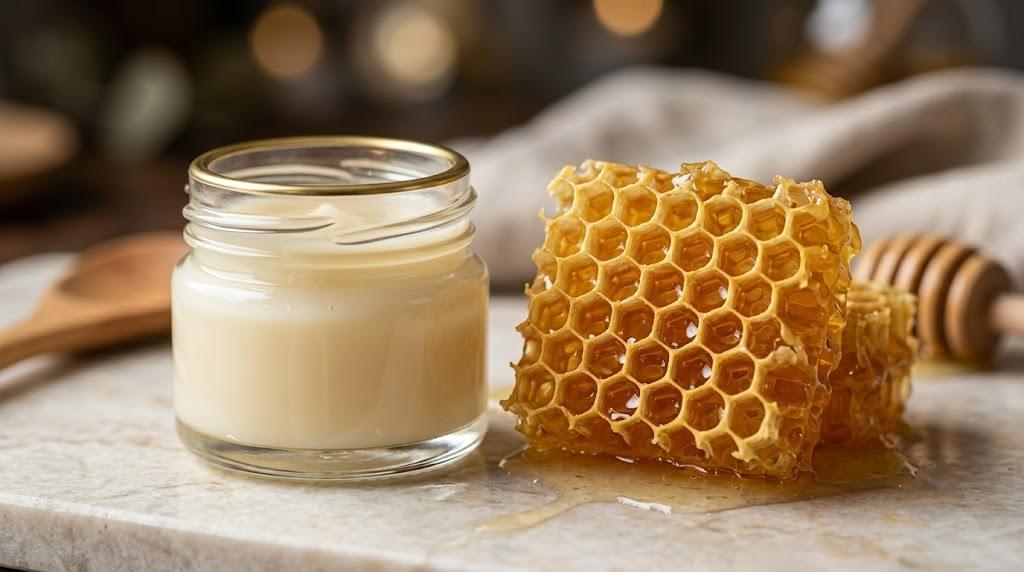
While honey handles sweetening and preservation, royal jelly offers an entirely different functional profile. Secreted by nurse bees to nourish the queen, this creamy substance is prized for its royal jelly health applications.
Its primary active marker is 10-HDA (trans-2-decenoic acid), a unique fatty acid found nowhere else in nature. It also contains high-quality proteins (12–15% dry weight), royalactin, and high levels of pantothenic acid (Vitamin B5). Clinical research suggests these elements support cognitive health, collagen synthesis, and immune defense.
📝 For detailed formulation guidelines and technical specifications, please explore our comprehensive Royal Jelly Health Benefits guide.
🌾 Bee Pollen: Concentrated Nutritional Density
If you are looking for raw nutritional density, bee pollen is an excellent choice. Collected at the hive entrance, it represents a gold standard of plant-based nutrition, making it a favorite for sports nutrition and dietary supplements.
A quick look at the bee pollen nutritional value reveals a massive nutrient profile:
- Plant Protein (15–40%): Contains all essential amino acids.
- Lipids: Packed with essential fatty acids like alpha-linolenic acid.
- Vitamins & Minerals: Rich in B-complex, Vitamin C, zinc, and magnesium.
To see how to utilize this ingredient in granular or powdered forms, read our practical Bee Pollen Benefits guide.
🏭 Formulator Specifications: Sourcing with Confidence
Integrating bee products into commercial manufacturing requires strict consistency, absolute traceability, and clear compliance with global food safety regulations.
When choosing ingredients, manufacturers should closely review the Codex Alimentarius honey composition standards to make sure their supply chain aligns with international purity guidelines. At Delee Honey, we recognize that raw materials must meet precise technical parameters to maintain product quality on the production line.
🐝 Bee Product Raw Material Sourcing Matrix
| Ingredient | Primary Quality Marker | Common Application |
|---|---|---|
| Raw Honey | Diastase Activity / HMF | Clean-Label Sweeteners |
| Royal Jelly | 10-HDA Concentration Grades | Nutraceuticals & Skincare |
| Bee Pollen | Particle Size & Purity | Sports Nutrition Bars |
To assist your development team, we offer floral-specific honeys with full analytical data packages, standardized royal jelly, and custom-milled bee pollen. All our ingredients fit seamlessly into your existing product lines and meet strict international regulatory standards.
If you are ready to elevate your product formulation with clean-label, high-purity bee products, please Contact Delee today to request technical samples. You can also browse our commercial portfolio by visiting our dedicated Bee Products category.