











Every commercial honey shipment arrives with a Certificate of Analysis (CoA). Yet many buyers review the document without fully understanding what the numbers mean—or how those results could affect product quality, compliance, and brand reputation.
🍯 Honey quality testing is more than a regulatory requirement. It is one of the most effective tools for reducing supply risk, verifying authenticity, and ensuring that the honey you purchase meets both market expectations and import requirements.
In this guide, we’ll explain the most important testing parameters, why they matter to manufacturers and distributors, and how Delee Honey verifies quality before every shipment leaves our facility.
Why Honey Quality Testing Matters More Than Ever
Honey remains one of the world’s most frequently adulterated food products. As global demand increases, buyers face growing challenges related to authenticity, consistency, and food safety.
Common quality risks include:
🔍 Sugar adulteration through corn syrup, glucose syrup, or cane sugar additions
🌡️ Excessive heat exposure that damages natural enzymes and accelerates aging
💧 High moisture content that increases fermentation risk
🌍 Origin mislabeling that substitutes lower-value honey for premium varieties
Without proper honey quality testing, these issues may only become visible after the product reaches retail shelves, creating costly recalls, customer complaints, or regulatory complications.
For importers and food manufacturers, testing is no longer optional—it’s an essential part of supply chain management.
1. Moisture Content: The Foundation of Honey Stability
Why Moisture Matters
Among all testing parameters, moisture content has one of the most direct impacts on storage stability and shelf life.
Industry targets generally include:
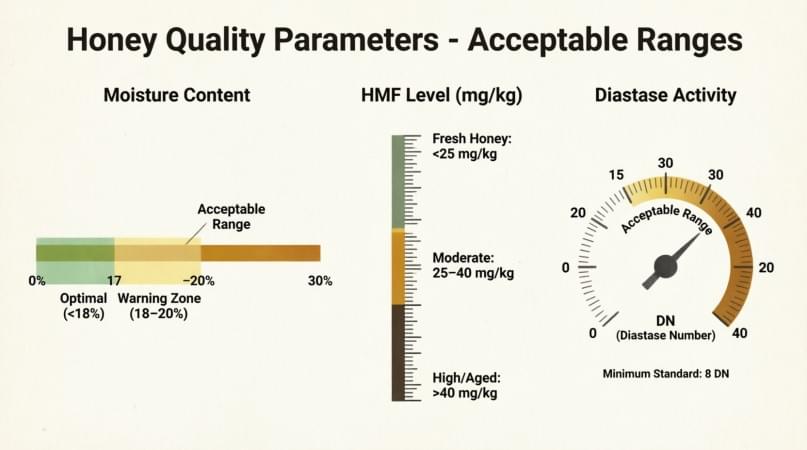
✅ Premium honey: ≤18%
✅ Standard honey: ≤20% (Codex limit)
When moisture levels exceed 20%, the risk of yeast fermentation increases significantly, especially during transportation and storage in warm climates.
Fermented honey can develop undesirable flavors, produce gas inside containers, and fail import inspections.
How Moisture Is Measured
Moisture is typically measured using refractometry, a fast and highly reliable method used throughout the honey industry.
At Delee, moisture testing is conducted both at the beekeeper collection stage and again when raw honey arrives at our processing facility, helping ensure consistency before production begins.
2. Honey HMF Test: Measuring Freshness and Heat Exposure
What Is HMF?
Hydroxymethylfurfural (HMF) is a naturally occurring compound that increases when honey is heated or stored for long periods.
Typical standards include:
✅ ≤40 mg/kg under Codex requirements
✅ ≤80 mg/kg for certain tropical-origin honeys
A professional honey HMF test helps identify:
- Excessive heating during processing
- Poor storage conditions
- Aging honey
- Potential syrup adulteration
Fresh honey often contains less than 10 mg/kg of HMF. Elevated values may indicate that the honey has experienced quality degradation before reaching the buyer.
For brands marketing raw or minimally processed honey, HMF is one of the most closely monitored specifications.
3. Diastase Activity in Honey: Protecting Natural Enzymes
What Does Diastase Measure?
Diastase is a naturally occurring enzyme produced by bees and present in genuine honey.
Because heat destroys this enzyme, diastase activity in honey serves as an important indicator of processing conditions.
Codex standards generally require:
✅ Minimum 8 Schade units
High diastase activity often suggests that honey has undergone minimal heat treatment, while low activity may indicate excessive processing or prolonged storage.
Manufacturers positioning products as raw, natural, or enzyme-rich should pay particular attention to this parameter during supplier evaluations.
4. Honey Adulteration Testing: Detecting Added Sugars
Why Adulteration Screening Is Essential
One of the most important aspects of modern honey adulteration testing is identifying the addition of inexpensive sugars.
The industry-standard IRMS (Isotope Ratio Mass Spectrometry) method detects carbon isotope patterns that reveal whether sugars originate from C4 plants such as corn or sugarcane.
A result exceeding approximately 7% C4 sugar content is widely considered evidence of adulteration.
For export-oriented buyers, IRMS verification provides an additional layer of confidence and is increasingly requested by regulators and customers worldwide.
5. Pesticide Residue Testing for Global Compliance
🐝 Bees forage across large geographic areas, meaning environmental contaminants can eventually appear in harvested honey.
Regulatory authorities—particularly within Europe—maintain strict limits on pesticide residues.
Non-compliant results may lead to:
- Border rejections
- Shipment delays
- Financial losses
- Inclusion in food safety alert systems
To reduce these risks, Delee conducts comprehensive multi-residue testing aligned with major export market requirements.
6. Heavy Metal Screening
Heavy metals such as:
- Lead (Pb)
- Cadmium (Cd)
- Arsenic (As)
- Mercury (Hg)
are routinely monitored in many international markets.
Although contamination levels are generally low in quality honey, testing remains important for compliance with regulations in regions such as the EU, Japan, and China.
Results are included within the Certificate of Analysis when required by customer specifications.
7. Laboratory Verification and Third-Party Testing
Reliable testing depends not only on the parameters measured but also on the credibility of the laboratory performing the analysis.
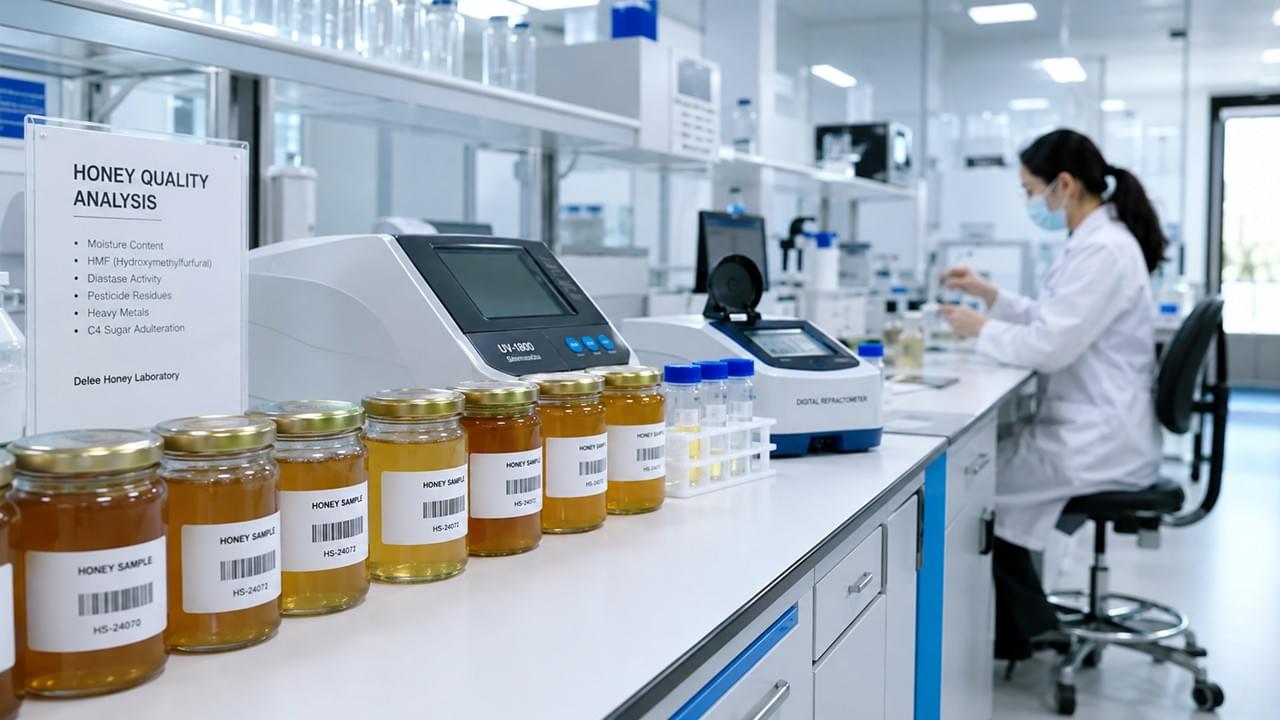
🔬 At Delee, routine batch testing is conducted through our internal quality laboratory. For specialized analyses such as IRMS adulteration screening and extensive pesticide panels, we cooperate with accredited third-party laboratories.
This combination provides buyers with:
✅ Batch-specific test reports
✅ Customized testing options
✅ Historical quality data
✅ Support for incoming inspection programs
How to Read a Honey Certificate of Analysis
When reviewing a CoA, focus on four critical checkpoints:
📅 Test Date
Verify that results correspond to the actual production lot being shipped.
📖 Analytical Methods
Reliable laboratories clearly state the testing methods used.
📏 Measurement Units
Ensure all values are reported using the units specified in your purchasing standards.
✔️ Specification Compliance
Compare each result against your own quality requirements rather than relying solely on pass/fail statements.
Request sample test reports from Delee →
To understand how testing integrates with our broader quality assurance system, explore our Pillar 2 Certification Overview or learn more about our Bee Farms Traceability System.
In today’s global honey market, quality verification is no longer just a compliance exercise. Effective honey quality testing helps buyers confirm authenticity, reduce sourcing risks, and maintain consistent product performance across every batch.
From moisture and HMF measurements to adulteration screening and pesticide analysis, understanding these parameters allows procurement teams to make informed decisions and build more reliable supply chains.
The better you understand the numbers behind a Certificate of Analysis, the more confidently you can evaluate suppliers—and protect your brand.