

The private label honey market has expanded substantially over the past decade, driven by consumer acceptance of retailer-brand products, tightening household budgets in some regions, and the rise of premium private label that competes head-to-head with national brands. 🐝
Within this broader trend, honey occupies a distinctive position: it is simultaneously a commodity ingredient and a premium artisan product. That duality creates specific openings for well-positioned programs — and specific risks for undifferentiated commodity plays. For the manufacturing side of the equation, our honey OEM and private label pillar covers what a supplier must deliver.
Private Label Honey Market Context 📊
Global honey consumption continues its long-term growth, driven by clean-label preferences and rising awareness of honey’s functional properties. Private label honey — sold under retailer, distributor, or brand owner labels rather than manufacturer brands — represents a growing share of that consumption. The current China bee product export data shows the trade flows behind this shift.
In mature markets (Western Europe, UK, Australia), the private label honey market has benefited from three structural forces:
- Retailer consolidation: fewer, larger grocery chains with greater private label investment capacity
- Premium private label growth: retailer premium-tier programs (Waitrose own label, Carrefour Bio) creating genuinely high-quality segments
- Clean-label preference: private label honey positioned on natural and artisan credentials attracts the same consumers driving premium packaged food
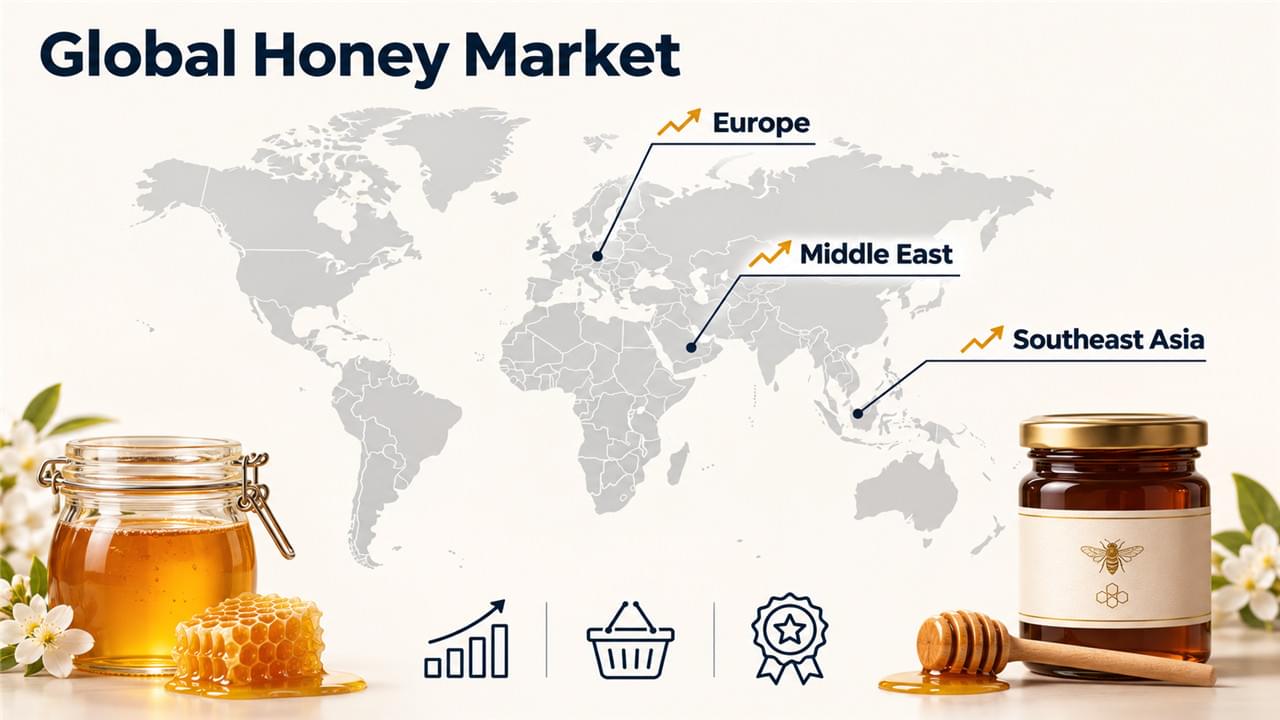
In emerging and high-growth markets (Middle East, Southeast Asia, East Africa), private label honey grows from a smaller base but with a stronger trajectory.
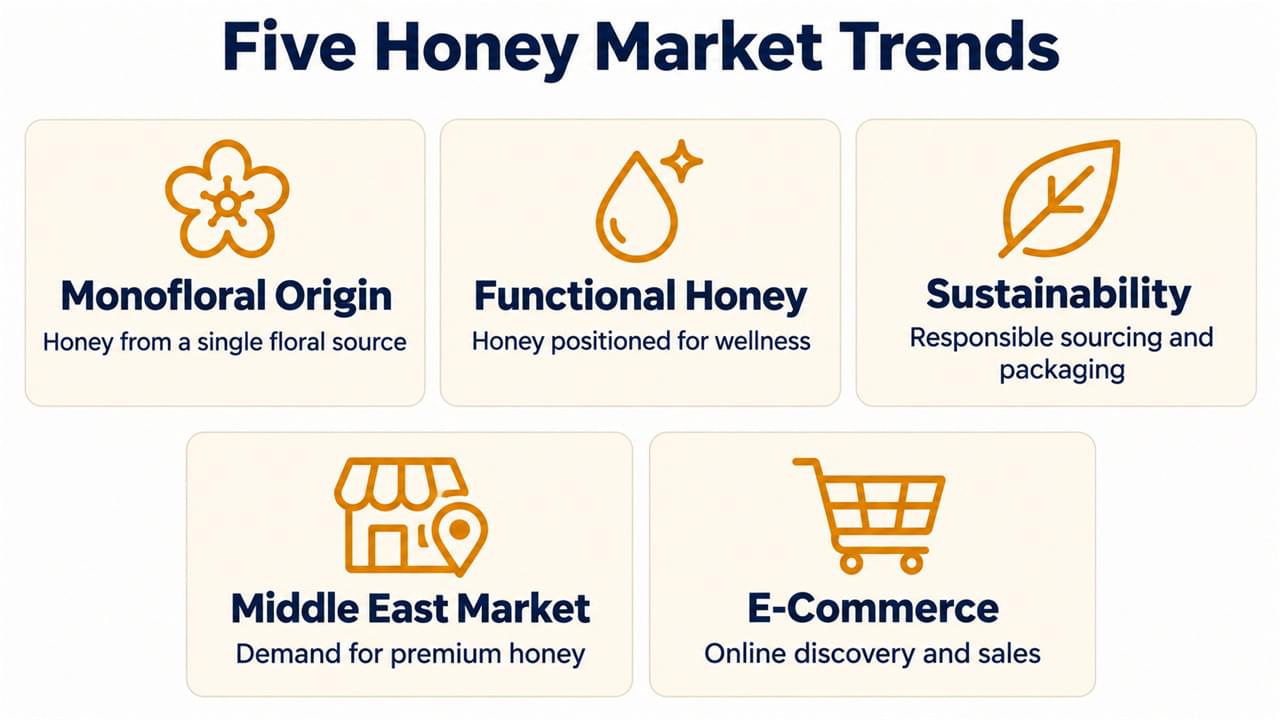
5 Trends Shaping the Private Label Honey Market in 2025–2026
Trend 1: Monofloral Origin Premiumization Reshapes the Private Label Honey Market 🌼
The clearest growth trend is the shift from generic “pure honey” to named monofloral varieties with specific geographic origin. Acacia honey from named Chinese provinces, linden from mountain regions, manuka-adjacent varieties — all command premiums that generic blends cannot. For developers, this argues for product ranges built around named varieties with verifiable origin documentation, not blends with vague descriptors.
Trend 2: Functional Positioning in the Private Label Honey Market 💊
Honey positioned on specific functions — immune support, sleep, gut health, energy — is growing in premium supplement and functional food retail. The positioning requires specific-variety claims with an evidence base (manuka-style honey with specified methylglyoxal content), or combination products (honey + probiotic, + adaptogens, + propolis), and careful regulatory navigation. Health claims face significant scrutiny in the EU and other markets, so anchor quality statements to the Codex Alimentarius honey standard.
Trend 3: Sustainability as a Private Label Honey Market Differentiator 🌿
Sustainability credentials are increasingly a purchase driver in premium segments. Programs that document sustainable sourcing — bee-friendly agriculture in supply areas, non-migratory beekeeping, no antibiotic use — can access premium shelf positions and price points that undifferentiated products simply cannot reach.
Trend 4: The Middle East Growth Engine of the Private Label Honey Market 🌏
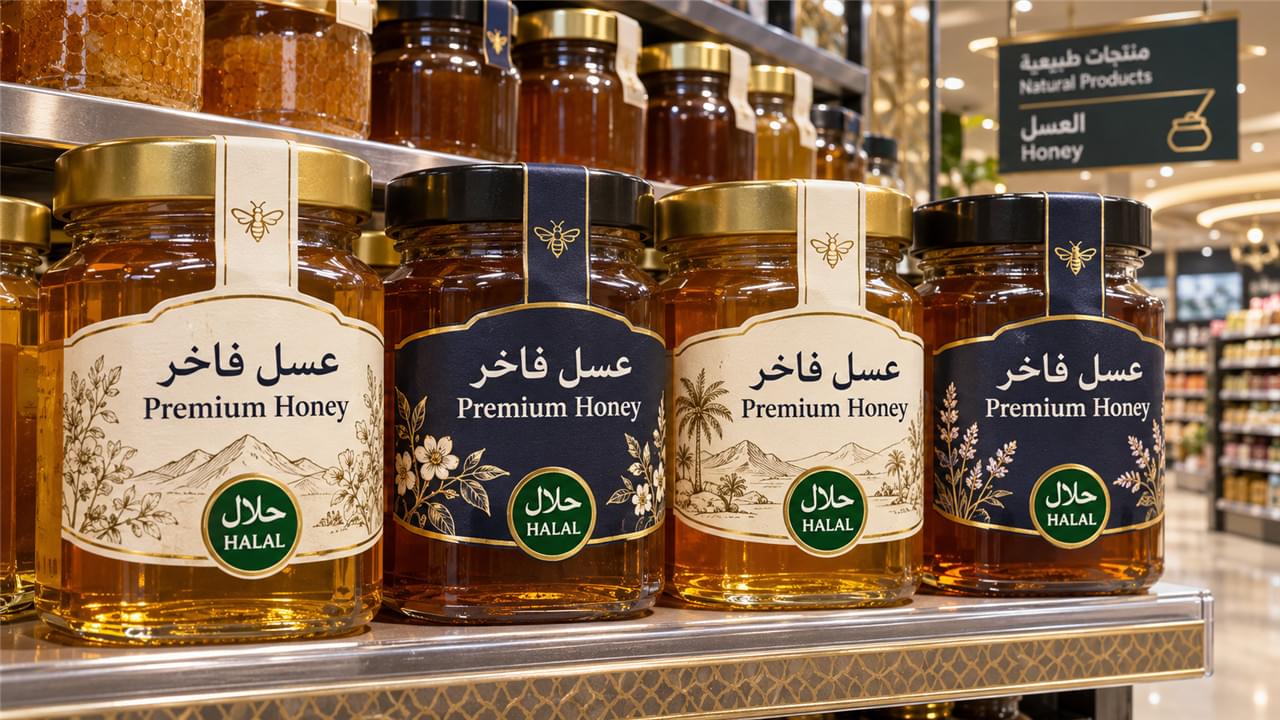
The GCC markets — Saudi Arabia, UAE, Kuwait, Bahrain, Qatar, Oman — represent a significant opportunity: strong honey consumption culture, high purchasing power, mandatory HALAL certification (a natural qualification barrier for well-certified suppliers), and fast-modernizing retail infrastructure. Chinese honey with HALAL certification, priced competitively against premium European imports, holds a strong commercial position in GCC private label programs.
Trend 5: E-Commerce and White Label Honey Opportunities 🛒
D2C honey brands — running their own platforms or marketplace storefronts — are the fastest-growing channel for premium and specialty private labels. Lower minimum orders, a direct consumer feedback loop, and premium pricing potential make the channel genuinely attractive for emerging brands. Of all the honey private label trends 2026 will test, D2C rewards storytelling speed the most.
Strategic Implications for the Private Label Honey Market 🎯
The trends point toward one consistent direction for 2025–2026:
- Differentiate on origin and variety, not price, in generic honey
- Target markets with structural advantages: Middle East (HALAL-certified supply), premium grocery (monofloral varieties), e-commerce (storytelling-driven D2C)
- Build documentation-supported claims: traceability, sustainability, and functional properties all need paperwork behind them — choose suppliers who can provide it
- Start focused: two or three well-positioned varietals with strong design and verified quality outperform broad, undifferentiated ranges
For developers tracking premium honey market growth specifically, the pattern repeats across regions: verified origin plus clean design beats volume plays, every time.
How Delee Supports Private Label Honey Market Entry 🤝
Delee’s manufacturing capabilities, geographic sourcing breadth, and export track record provide the supply chain foundation for programs targeting the trends above — HALAL certification, traceability documentation, and a premium varietal range map directly onto the requirements identified in this analysis. Deeper regional and category analysis lives in our industry trends pillar.
For a detailed market discussion and OEM program information, contact the export team at deleehoney.com/about-us/. 🐝