












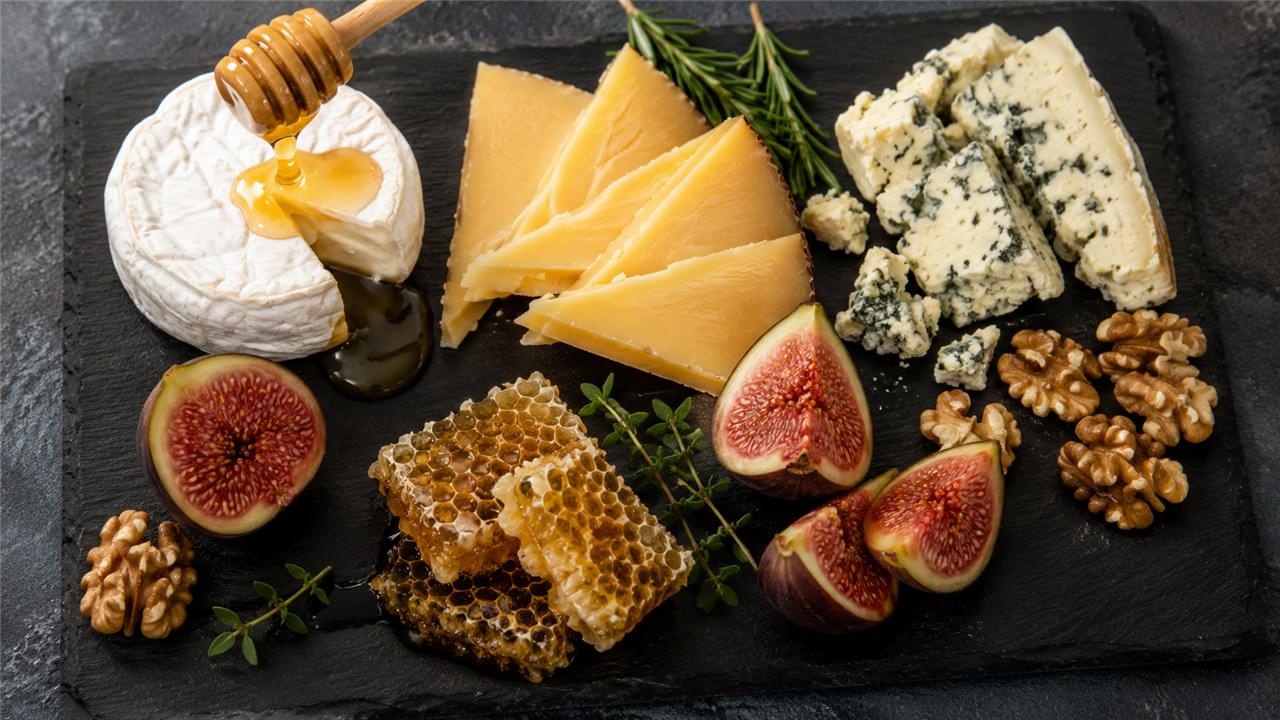
Ask any specialty food buyer about honey cheese pairing and you’ll hear the same refrain: it’s one of the most commercially versatile combinations in the category. Artisan cheese shops, fine-dining cheese courses, catered corporate events, premium gift sets — the pairing creates value across almost every food business format you can name. 🍯
This guide covers the flavor principles behind pairings that actually work, the varietal combinations you can rely on at commercial scale, and the sourcing considerations that keep cheese programs running smoothly. It’s part of our series on honey culinary applications, and if baked goods are more your angle, our guide to healthy baking with honey is a good companion read.
🧀 Why Honey Cheese Pairing Works
The relationship is rooted in contrast and balance. Cheese brings savory, umami, and often acidic notes on a rich, fatty base. Honey answers with sweetness, aromatic complexity, and acidity-bridging character. Together they create a flavor experience bigger than either ingredient delivers alone — which is exactly why this pairing keeps showing up everywhere from retail boards to tasting menus.
Texture does its part too. The viscosity of honey against the dense creaminess of soft cheese, or the crumble of aged hard cheese, gives a contrast that elevates the eating experience. It’s a small detail that matters a lot when the product is a board kit or a restaurant course.
⚖️ Pairing Principles: Matching Intensity
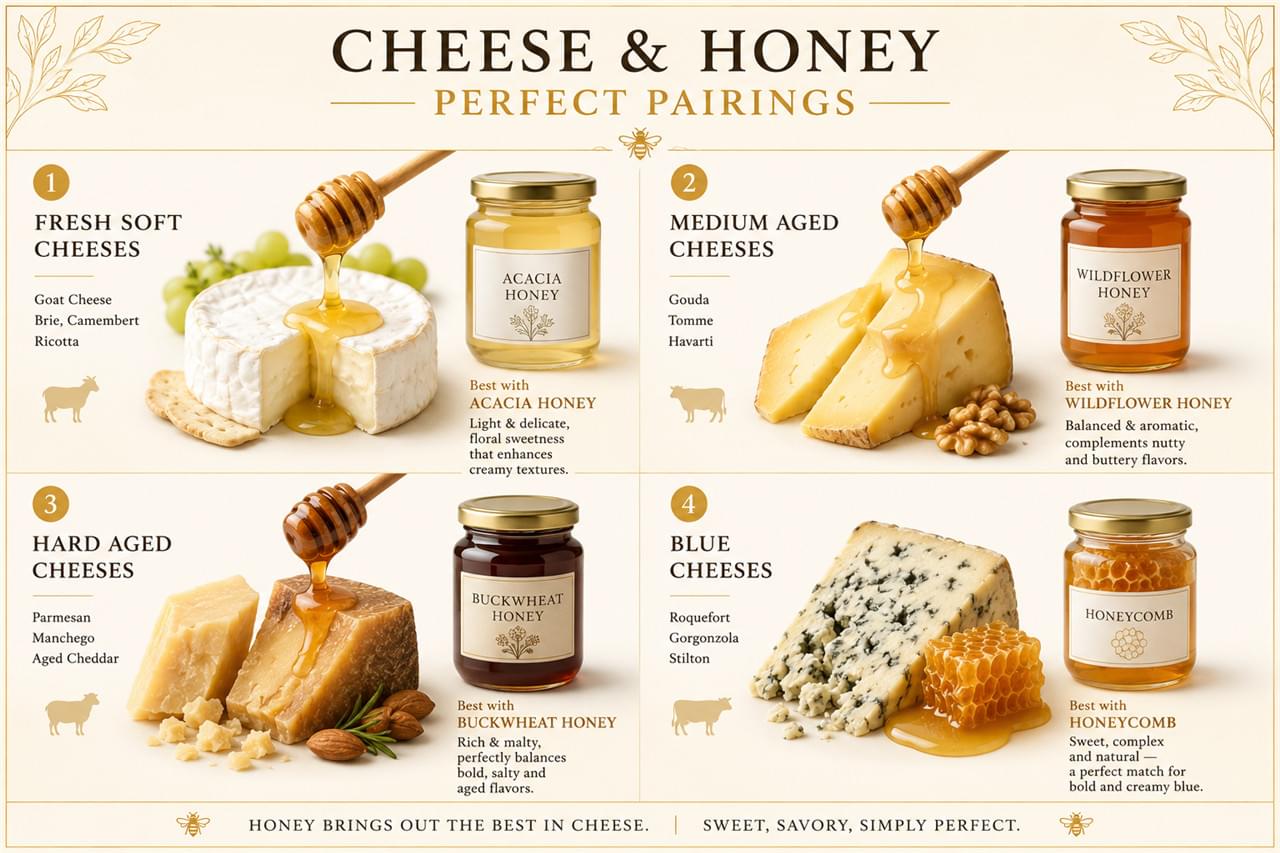
One rule governs honey cheese pairing: match the intensity. Light, delicate honeys go with mild cheeses; robust, complex honeys stand up to aged and pungent varieties. Most gourmet food pairing ideas start from this principle, and honey-cheese is the textbook example. Here’s the ladder, from soft to bold.
🌸 Honey Cheese Pairing for Mild Cheeses
Fresh ricotta, chèvre, burrata, and mild mozzarella pair beautifully with acacia honey. Its pale color, gentle sweetness, and clean finish complement delicate dairy without overpowering it — ideal for boards and gift packaging where visual elegance is half the sell. If acacia is on your shortlist, the acacia honey product category shows what consistent monofloral sourcing looks like.
🌼 Honey Cheese Pairing for Medium-Aged Cheeses
Brie, camembert, and young comté reward the more complex notes of wildflower and linden honeys. The floral and herbal undertones echo the mushroomy, earthy character that develops in bloomy rind cheeses during aging — a quiet synergy that regulars notice and repeat customers come back for.
🍫 Honey Cheese Pairing for Aged and Hard Cheeses
Honey flavors with aged cheese follow a simple rule: go dark. Parmigiano-Reggiano, aged Manchego, and strong cheddars stand up to buckwheat honey’s malty, molasses-adjacent depth — a striking contrast against the crystalline texture and umami intensity of aged hard cheese. Chestnut honey, with its slightly bitter finish, plays the same role beautifully.
🫐 Honey Cheese Pairing for Blue Cheeses
Roquefort, gorgonzola, and Stilton traditionally meet boldly flavored honey or honeycomb. The wax adds a textural element and visual appeal suited to premium service formats, while the bitterness and salt of blue cheese against honey’s sweetness creates one of the most memorable flavor contrasts in the whole category.
🏪 Commercial Applications
🧺 Cheese Board Kits: Where Honey Cheese Pairing Sells
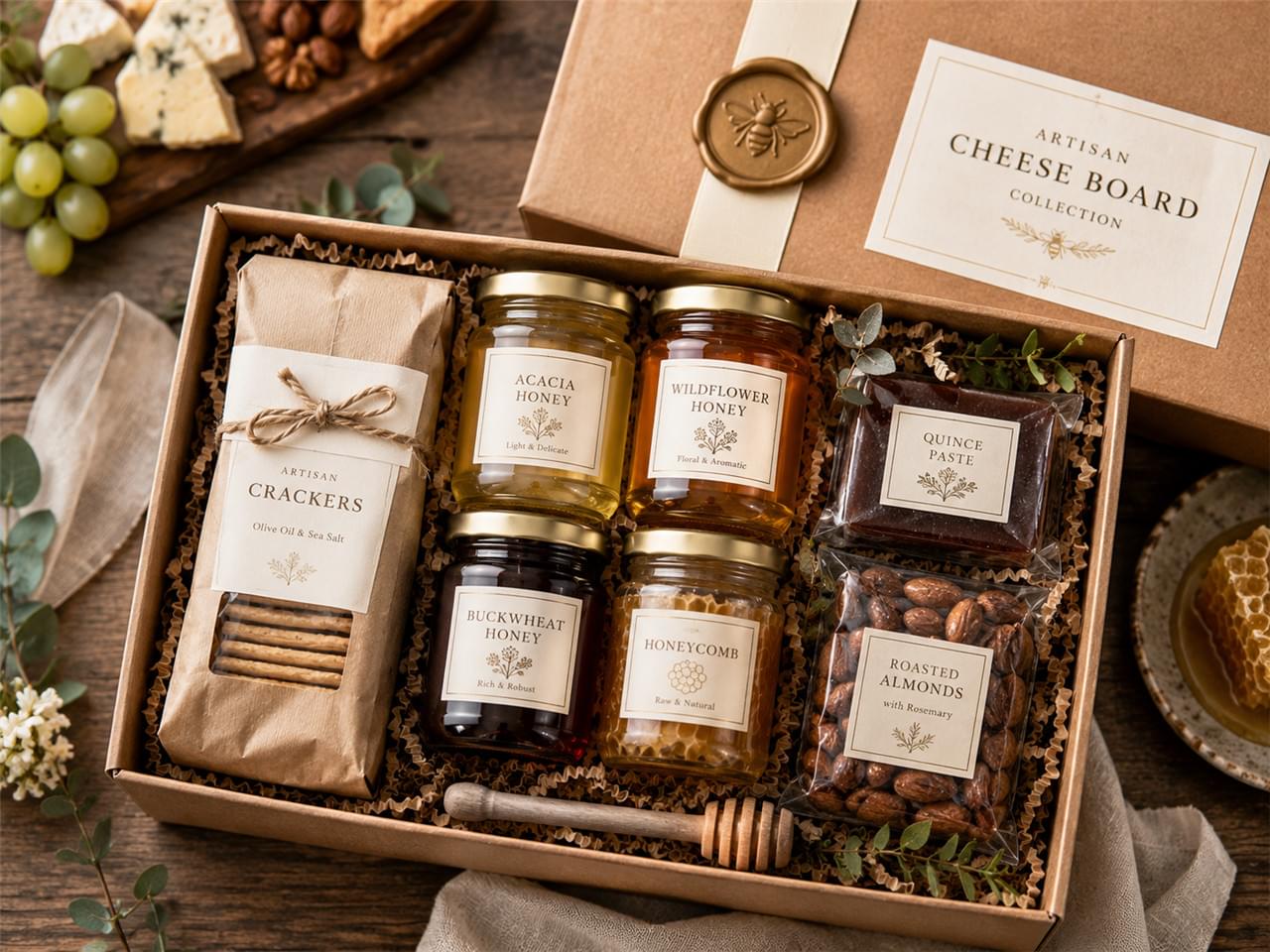
Specialty retail has driven strong growth in curated pairing products — board kits, gift boxes, grazing sets. Adding a honey component turns a plain cheese selection into a premium experience with a higher price point. Choosing honey varieties for cheese boards is where the product comes alive: acacia in mini glass jars, honeycomb in small containers, or a mixed selection for variety. Delee Honey supplies retail-sized packaging — including 50g and 100g glass jars — made for gift sets and artisan retail programs.
🍽️ Restaurant and Hospitality Service
Cheese courses in fine dining increasingly feature honey as a standard accompaniment. Operators sourcing honey need consistent flavor profiles, reliable supply, and presentation formats that work tableside. Single-origin varietals let front-of-house staff tell provenance stories — narrative value that diners remember and talk about.
🏭 Specialty Food Manufacturing
Honey shows up in several cheese-adjacent categories: honey-infused cream cheese, honey-drizzled baked brie in retail packaging, and cheese-and-honey appetizer kits for the deli counter. These products need food-grade bulk honey with consistent organoleptic specifications — no surprises between batches.
📋 Sourcing Notes for Food Businesses
For cheese board programs and specialty food manufacturing, three sourcing points matter most:
- Varietal consistency: acacia should reliably deliver pale color and mild flavor; varietal specifications prevent batch-to-batch drift
- Packaging flexibility: retail-sized and bulk formats serve different parts of your product line
- HACCP-compliant supply documentation for retail and foodservice compliance
The Codex Alimentarius food standards are the reference most buyers default to when writing honey specifications. And if you’re building a honey cheese pairing program at scale, Delee Honey’s product range — wholesale pricing and custom packaging included — is one conversation away at deleehoney.com/packages/. 🧀