











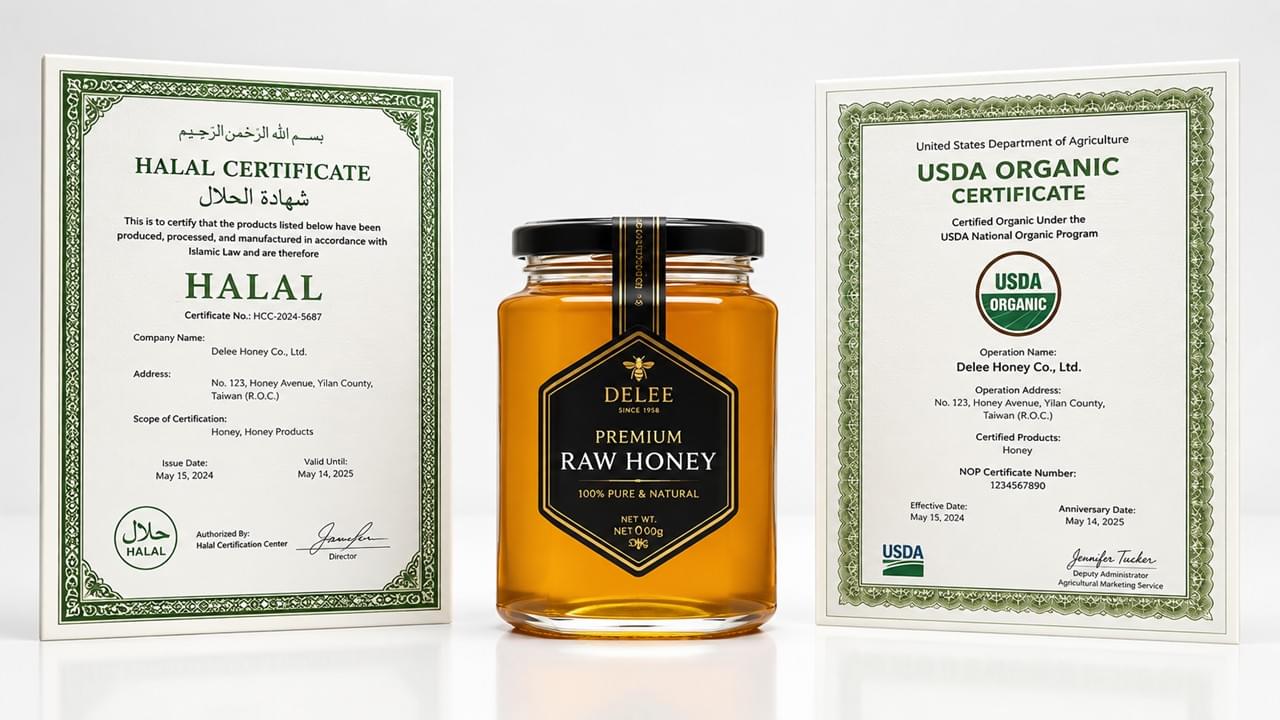
Pensijilan telah menjadi salah satu isyarat kepercayaan yang paling penting dalam perdagangan madu antarabangsa. Bagi pengimport, pemborong dan jenama label persendirian, Pensijilan madu organik HALAL bukan lagi sekadar kelebihan pemasaran — ia selalunya merupakan keperluan kemasukan pasaran.
Di rantau seperti Timur Tengah, Asia Tenggara, Eropah dan Amerika Utara, pembeli semakin menjangkakan produk madu memenuhi piawaian keselamatan makanan, pematuhan agama dan kemampanan yang ketat. Memahami sistem pensijilan ini membantu perniagaan mengurangkan risiko perolehan, meningkatkan pematuhan dan mengukuhkan kredibiliti jenama dalam pasaran yang kompetitif.
Bagi pembeli B2B, cabarannya bukan sekadar mendapatkan sijil. Cabaran sebenar terletak pada pengesahan sama ada pembekal benar-benar mematuhi piawaian di sebalik pensijilan tersebut.
🌍 Mengapa Pensijilan Madu Organik HALAL Penting dalam Perdagangan Global
Permintaan untuk madu yang diperakui terus meningkat apabila pengguna menjadi lebih selektif tentang sumber makanan dan ketelusan pengeluaran.
Produk yang diperakui HALAL adalah penting dalam pasaran majoriti Muslim, manakala pensijilan organik menarik pengguna yang mementingkan kesihatan yang mencari produk makanan yang diproses secara minimum dan bertanggungjawab terhadap alam sekitar.
Bagi pengimport dan pengedar, produk madu yang diperakui boleh menyediakan:
- ✅ Pelepasan kastam yang lebih mudah
- ✅ Kedudukan runcit yang lebih kukuh
- ✅ Nilai produk yang lebih tinggi
- ✅ Akses yang lebih baik ke pasaran premium
- ✅ Kepercayaan pengguna yang meningkat
Mengikut trend industri makanan global, produk yang diperakui sering mencapai penerimaan runcit yang lebih tinggi berbanding alternatif konvensional, terutamanya di pasar raya premium dan rangkaian runcit yang berfokuskan kesihatan.
Anda boleh meneroka lebih lanjut tentang penyelesaian produk madu antarabangsa di Delee Honey.
🕌 Persijilan Madu Organik HALAL: Memahami Keperluan HALAL
Walaupun madu itu sendiri dibenarkan secara semula jadi di bawah undang-undang pemakanan Islam, pensijilan HALAL masih memerlukan kawalan ketat di seluruh rantaian bekalan.
🏭 Pensijilan dan Piawaian Pemprosesan Madu Organik HALAL
Sebuah fasiliti yang diperakui mesti memastikan pemprosesan madu mengelakkan pencemaran daripada bahan terlarang.
Keperluan pemprosesan HALAL yang biasa termasuk:
- Peralatan khusus atau yang telah disanitasi dengan betul
- Tiada risiko pencemaran berasaskan alkohol
- Rekod pengeluaran yang boleh dikesan
- Prosedur pengangkutan dan penyimpanan yang bersih
- Dokumentasi kelompok penuh
Bagi pengeksport, kebolehkesanan amat penting kerana banyak negara pengimport memerlukan pengesahan pematuhan khusus penghantaran.
🌐 Pensijilan Madu Organik HALAL dan Pengiktirafan Pasaran
Negara yang berbeza mengiktiraf pihak berkuasa pensijilan yang berbeza. Pembeli harus sentiasa mengesahkan sama ada badan penerbit diterima di pasaran destinasi.
Contohnya termasuk:
- 🇦🇪 UAE: Pengiktirafan berkaitan ESMA
- 🇸🇦 Arab Saudi: Keperluan berkaitan SASO
- 🇲🇾 Malaysia: JAKIM
- 🇮🇩 Indonesia: BPJPH
Seorang profesional Pembekal madu yang diperakui HALAL hendaklah menyediakan dokumen pensijilan terkini dan membantu pembeli dengan soalan pematuhan eksport sebelum penghantaran.
🌿 Pensijilan Madu Organik HALAL dan Piawaian Organik
Pensijilan organik secara amnya lebih kompleks daripada pensijilan HALAL kerana ia melibatkan amalan penternakan lebah dan keadaan persekitaran.
🐝 Pensijilan Madu Organik HALAL di Peringkat Ladang
Pengeluaran madu organik bermula dengan penempatan sarang dan pengurusan lebah.
Keperluan utama biasanya termasuk:
- 🌼 Akses ke zon makanan organik atau liar
- 🚫 Tiada racun perosak atau antibiotik yang dilarang
- 🌱 Amalan pemberian makanan tiruan yang terhad
- 📋 Rekod pemeriksaan ladang terperinci
Dalam banyak sistem pensijilan, lebah mesti mencari makanan dalam persekitaran semula jadi yang dilindungi jauh dari pencemaran industri dan aktiviti pertanian intensif.
Inilah salah satu sebab mengapa madu organik asli masih terhad dalam bekalan global.
📦 Pensijilan Madu Organik HALAL Semasa Pemprosesan
Mengekalkan integriti organik selepas penuaian adalah sama pentingnya.
Kemudahan yang diperakui mesti memastikan:
- Penyimpanan berasingan untuk madu organik
- Tidak boleh dicampur dengan madu konvensional
- Prosedur pembersihan yang diluluskan
- Kebolehkesanan pemprosesan penuh
Bagi pembeli yang terlibat dalam madu organik B2B sumber, kawalan ini membantu mengurangkan risiko pelanggaran pensijilan semasa pemeriksaan eksport.
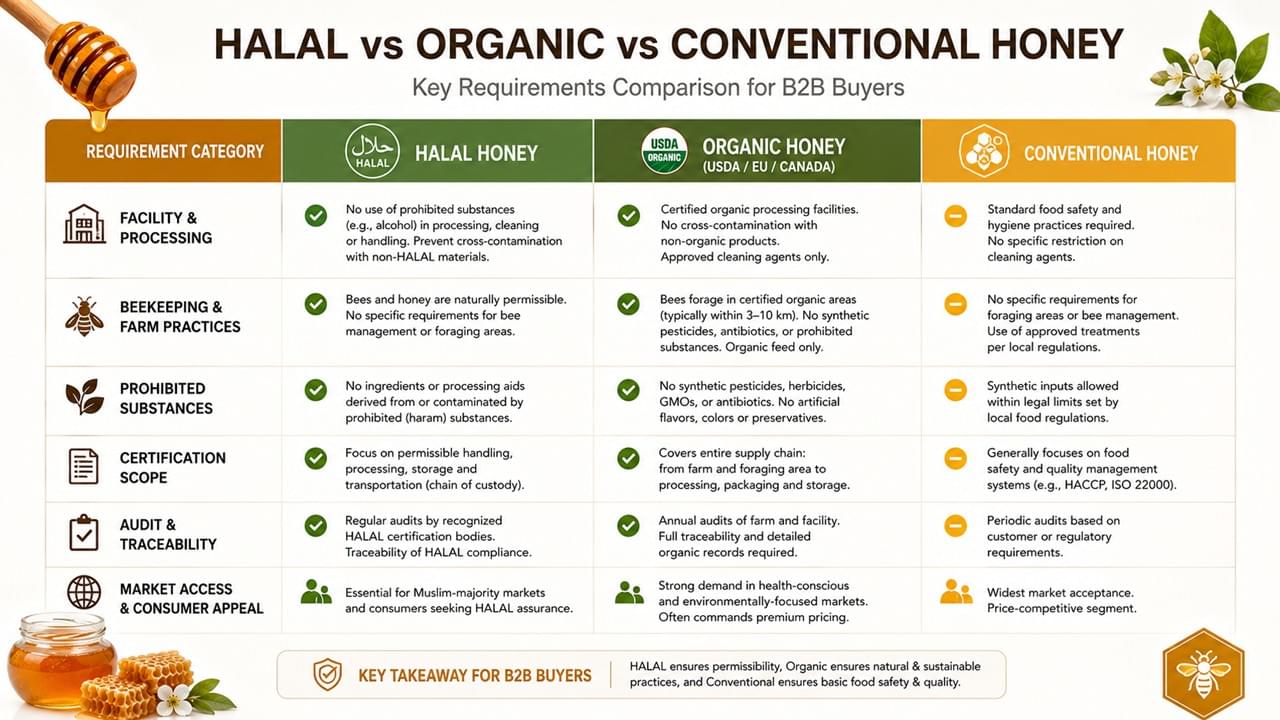
📑 Piawaian Organik Antarabangsa Utama
Destinasi eksport yang berbeza memerlukan rangka kerja organik yang berbeza.
🇪🇺 Piawaian Organik EU
Diperlukan secara meluas untuk pasaran runcit dan pembuatan makanan Eropah.
🇺🇸 Organik USDA (NOP)
Lazimnya diminta oleh pengimport di Amerika Syarikat.
🇨🇦 Organik Kanada
Diperlukan untuk banyak pengedar makanan organik Kanada.
Setiap sistem merangkumi pemeriksaan ladang, audit pemprosesan dan pembaharuan sijil tahunan.
Sebelum membeli, pembeli harus sentiasa menyemak skop pensijilan dan tarikh luput semasa pembekal.
🔍 Pensijilan Madu Organik HALAL: Bagaimana Pembeli Boleh Mengesahkan Pembekal
Salah satu cabaran terbesar dalam penyumberan antarabangsa adalah memastikan tuntutan pensijilan adalah sah.
Malangnya, sijil yang telah tamat tempoh atau mengelirukan masih terdapat dalam beberapa bahagian perdagangan madu global.
✅ Keperluan Pensijilan Madu Utama yang Perlu Disemak oleh Pembeli
Pembeli profesional perlu mengesahkan:
- 📅 Tarikh sah laku sijil
- 🏢 Pengiktirafan organisasi penerbit
- 📦 Liputan skop produk
- 🔄 Status pembaharuan tahunan
- 📄 Dokumentasi kebolehkesanan
Langkah-langkah pengesahan asas ini dapat mengurangkan risiko penyumberan dengan ketara.
Untuk panduan tambahan tentang sistem kualiti madu, anda boleh menyemak sumber dalaman di sini:
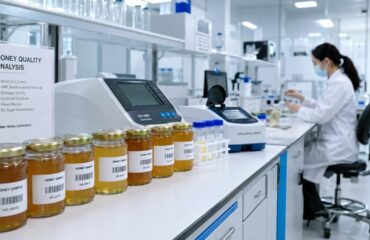
Gambaran Keseluruhan Pensijilan Kualiti Madu
Anda juga boleh merujuk piawaian organik antarabangsa secara langsung melalui:
🤝 Memilih Rakan Kongsi Madu Bertauliah yang Tepat
Pensijilan sahaja tidak menjamin kebolehpercayaan bekalan. Pengimport berpengalaman juga menilai:
- Kapasiti pengeluaran
- Pengalaman eksport
- Ketekalan kelompok
- Keupayaan ujian makmal
- Fleksibiliti pembungkusan
- Responsif dokumentasi
Pembekal yang boleh dipercayai sepatutnya dapat menyokong pematuhan peraturan dan pertumbuhan perniagaan jangka panjang.
Memandangkan peraturan global terus diperketatkan, bekerjasama dengan pembekal yang dipercayai menjadi semakin penting untuk melindungi reputasi jenama anda.
🍯 Pemikiran Akhir
Bagi industri makanan antarabangsa hari ini, Pensijilan madu organik HALAL mewakili lebih daripada sekadar label. Ia mencerminkan kebolehkesanan, disiplin pemprosesan, pematuhan peraturan dan kepercayaan pengguna.
Sama ada anda mencari sumber untuk pasar raya, pembuatan makanan, pelabelan persendirian atau pengedaran produk kesihatan, memahami sistem pensijilan boleh membantu anda membuat keputusan pembelian yang lebih tepat.
Bagi pembeli B2B, perkongsian yang paling berjaya dibina berdasarkan ketelusan, pematuhan yang disahkan dan kualiti produk yang konsisten — bukan sekadar harga sahaja.
Ketahui lebih lanjut tentang pendekatan pengurusan kualiti kami yang lebih luas dalam Gambaran keseluruhan Pensijilan Tonggak 2 atau ulas rangkaian produk kami bermula dari deleehoney.com.