



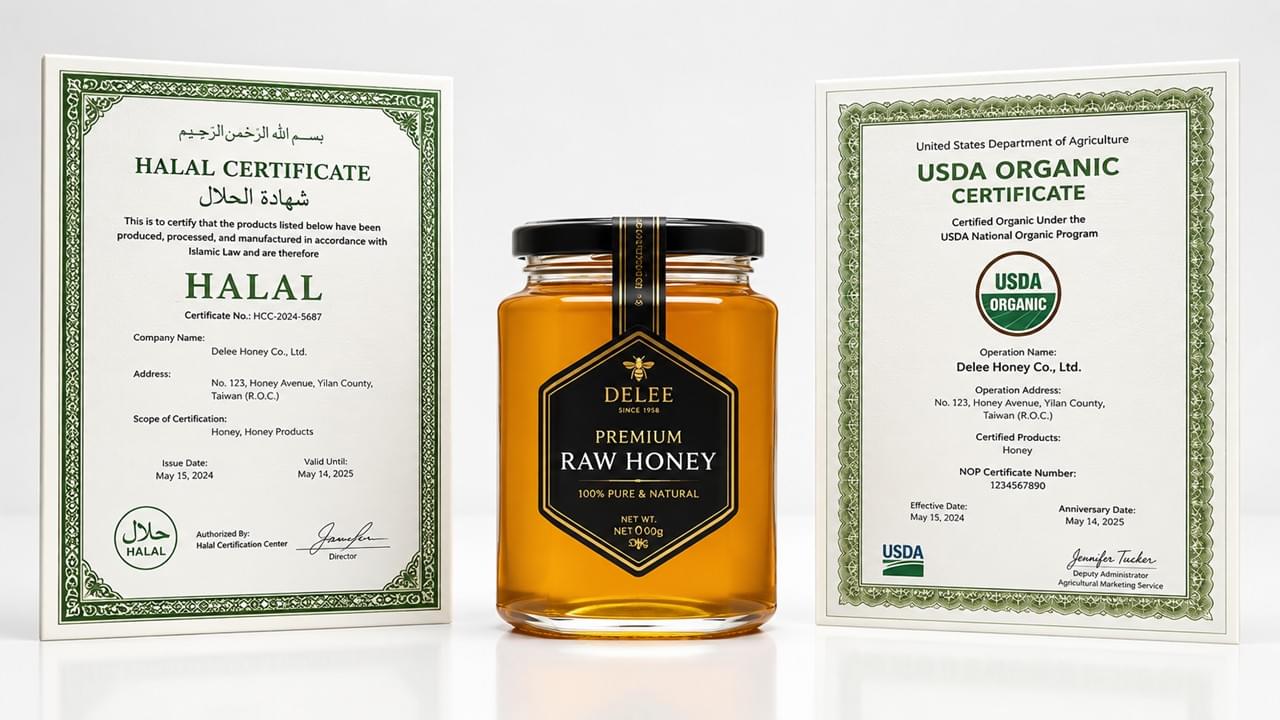
Die Zertifizierung hat sich zu einem der wichtigsten Vertrauenssignale im internationalen Honighandel entwickelt. Für Importeure, Großhändler und Handelsmarken gilt dies., HALAL-Zertifizierung für Bio-Honig ist nicht mehr nur ein Marketingvorteil – es ist oft eine Markteintrittsvoraussetzung.
In Regionen wie dem Nahen Osten, Südostasien, Europa und Nordamerika erwarten Käufer zunehmend, dass Honigprodukte strenge Standards in Bezug auf Lebensmittelsicherheit, religiöse Vorschriften und Nachhaltigkeit erfüllen. Das Verständnis dieser Zertifizierungssysteme hilft Unternehmen, Beschaffungsrisiken zu minimieren, die Einhaltung von Vorschriften zu verbessern und die Markenbekanntheit in wettbewerbsintensiven Märkten zu stärken.
Für B2B-Einkäufer besteht die Herausforderung nicht allein im Erhalt von Zertifikaten. Die eigentliche Herausforderung liegt darin, zu überprüfen, ob Lieferanten die hinter diesen Zertifizierungen stehenden Standards tatsächlich einhalten.
🌍 Warum die HALAL-Zertifizierung von Bio-Honig im globalen Handel wichtig ist
Die Nachfrage nach zertifiziertem Honig wächst stetig, da die Verbraucher bei der Lebensmittelbeschaffung und der Transparenz der Produktion immer wählerischer werden.
In Märkten mit muslimischer Mehrheit sind HALAL-zertifizierte Produkte unerlässlich, während Bio-Zertifizierungen gesundheitsbewusste Verbraucher anziehen, die nach minimal verarbeiteten und umweltverträglichen Lebensmitteln suchen.
Für Importeure und Händler bieten zertifizierte Honigprodukte folgende Vorteile:
- ✅ Vereinfachte Zollabfertigung
- ✅ Stärkere Positionierung im Einzelhandel
- ✅ Höherer wahrgenommener Produktwert
- ✅ Besserer Zugang zu Premiummärkten
- ✅ Erhöhtes Verbrauchervertrauen
Dem globalen Trend in der Lebensmittelindustrie zufolge erzielen zertifizierte Produkte im Einzelhandel oft eine höhere Akzeptanz als konventionelle Alternativen, insbesondere in Premium-Supermärkten und auf Gesundheit ausgerichteten Einzelhandelsketten.
Mehr über internationale Honigproduktlösungen erfahren Sie unter Löschen Sie Honig.
🕌 HALAL-Zertifizierung für Bio-Honig: Die HALAL-Anforderungen verstehen
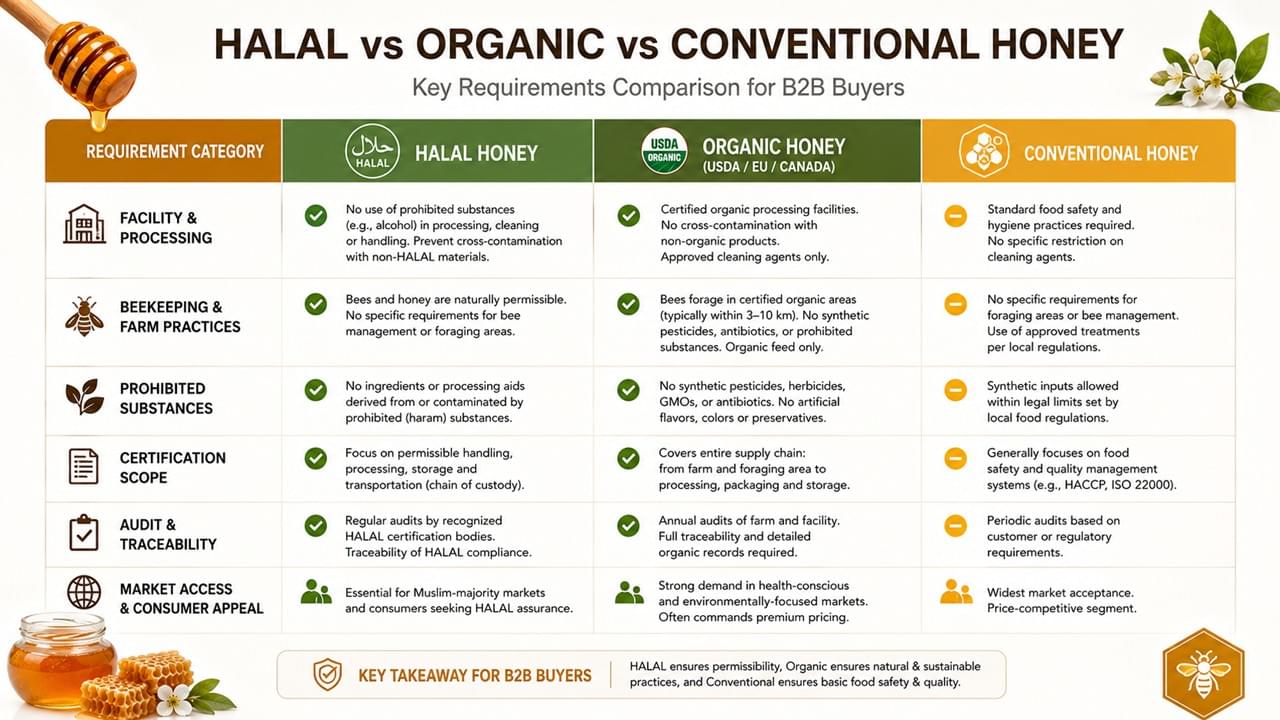
Obwohl Honig an sich nach islamischem Speiserecht zulässig ist, erfordert die HALAL-Zertifizierung dennoch eine strenge Kontrolle entlang der gesamten Lieferkette.
🏭 HALAL-Zertifizierung und Verarbeitungsstandards für Bio-Honig
Eine zertifizierte Anlage muss sicherstellen, dass bei der Honigverarbeitung keine Verunreinigungen durch verbotene Stoffe auftreten.
Zu den üblichen HALAL-Verarbeitungsanforderungen gehören:
- Spezielle oder ordnungsgemäß desinfizierte Geräte
- Keine Kontaminationsrisiken durch Alkohol
- Nachvollziehbare Produktionsaufzeichnungen
- Saubere Transport- und Lagerverfahren
- Vollständige Chargendokumentation
Für Exporteure ist die Rückverfolgbarkeit besonders wichtig, da viele Importländer eine sendungsspezifische Konformitätsprüfung verlangen.
🌐 HALAL-Zertifizierung für Bio-Honig und Marktanerkennung
Verschiedene Länder erkennen unterschiedliche Zertifizierungsstellen an. Käufer sollten sich daher stets vergewissern, ob die ausstellende Stelle im Zielmarkt anerkannt ist.
Beispiele hierfür sind:
- 🇦🇪 VAE: ESMA-bezogene Anerkennung
- 🇸🇦 Saudi-Arabien: SASO-bezogene Anforderungen
- 🇲🇾 Malaysia: JAKIM
- 🇮🇩 Indonesien: BPJPH
Ein Profi HALAL-zertifizierter Honiglieferant Sie sollten vor dem Versand aktualisierte Zertifizierungsdokumente bereitstellen und Käufern bei Fragen zur Exportkonformität behilflich sein.
🌿 HALAL-Zertifizierung für Bio-Honig und Bio-Standards
Die Bio-Zertifizierung ist im Allgemeinen komplexer als die HALAL-Zertifizierung, da sie sowohl Imkereipraktiken als auch Umweltbedingungen umfasst.
🐝 HALAL-Zertifizierung für Bio-Honig auf Bauernhofebene
Die Produktion von Bio-Honig beginnt mit der Aufstellung der Bienenstöcke und der Bienenhaltung.
Zu den wichtigsten Anforderungen gehören in der Regel:
- 🌼 Zugang zu Bio- oder Wildfuttergebieten
- 🚫 Keine verbotenen Pestizide oder Antibiotika
- 🌱 Begrenzte künstliche Fütterungspraktiken
- 📋 Detaillierte Aufzeichnungen der landwirtschaftlichen Betriebsinspektion
In vielen Zertifizierungssystemen müssen Bienen in geschützten natürlichen Umgebungen fernab von industrieller Verschmutzung und intensiver Landwirtschaft nach Nahrung suchen.
Dies ist einer der Gründe, warum echter Bio-Honig weltweit nur begrenzt verfügbar ist.
📦 HALAL-Zertifizierung für Bio-Honig während der Verarbeitung
Die Erhaltung der organischen Integrität nach der Ernte ist ebenso wichtig.
Zertifizierte Einrichtungen müssen Folgendes gewährleisten:
- Bio-Honig separat lagern
- Nicht mit herkömmlichem Honig mischen
- Genehmigte Reinigungsverfahren
- Vollständige Rückverfolgbarkeit der Verarbeitung
Für Käufer, die sich mit Bio-Honig B2B Durch die Beschaffung tragen diese Kontrollen dazu bei, das Risiko von Zertifizierungsverstößen bei Exportinspektionen zu verringern.
📑 Wichtige internationale Bio-Standards
Unterschiedliche Exportziele erfordern unterschiedliche organische Rahmenbedingungen.
🇪🇺 EU-Bio-Standard
Weitgehend benötigt im europäischen Einzelhandel und in der Lebensmittelindustrie.
🇺🇸 USDA Bio (NOP)
Wird häufig von Importeuren in den Vereinigten Staaten angefragt.
🇨🇦 Bio-Produkte aus Kanada
Für viele kanadische Bio-Lebensmittelhändler erforderlich.
Jedes System umfasst landwirtschaftliche Inspektionen, Prozessprüfungen und jährliche Zertifikatserneuerungen.
Vor dem Kauf sollten Käufer stets den aktuellen Zertifizierungsumfang und das Ablaufdatum des Lieferanten überprüfen.
🔍 HALAL-Zertifizierung für Bio-Honig: So können Käufer Lieferanten überprüfen
Eine der größten Herausforderungen bei der internationalen Beschaffung besteht darin, sicherzustellen, dass Zertifizierungsangaben rechtmäßig sind.
Leider tauchen in Teilen des globalen Honighandels immer noch abgelaufene oder irreführende Zertifikate auf.
✅ Wichtige Zertifizierungsanforderungen für Honig, die Käufer prüfen sollten
Professionelle Käufer sollten Folgendes überprüfen:
- 📅 Gültigkeitsdaten des Zertifikats
- 🏢 Anerkennung der ausstellenden Organisation
- 📦 Produktumfang
- 🔄 Status der jährlichen Verlängerung
- 📄 Rückverfolgbarkeitsdokumentation
Diese grundlegenden Überprüfungsschritte können die Beschaffungsrisiken erheblich reduzieren.
Weitere Informationen zu Honigqualitätssystemen finden Sie in den internen Ressourcen hier:
Überblick über die Honigqualitätszertifizierung
Internationale Bio-Standards können Sie auch direkt hier einsehen:
🤝 Den richtigen zertifizierten Honigpartner auswählen
Eine Zertifizierung allein garantiert keine Lieferzuverlässigkeit. Erfahrene Importeure prüfen daher zusätzlich:
- Produktionskapazität
- Exporterfahrung
- Chargenkonsistenz
- Labortestkapazität
- Flexibilität der Verpackung
- Reaktionsfähigkeit der Dokumentation
Ein zuverlässiger Lieferant sollte sowohl die Einhaltung gesetzlicher Vorschriften als auch langfristiges Geschäftswachstum unterstützen können.
Angesichts der zunehmenden Verschärfung der globalen Regulierungen wird die Zusammenarbeit mit einem vertrauenswürdigen Lieferanten immer wichtiger für den Schutz Ihres Markenrufs.
🍯 Schlussbetrachtung
Für die heutige internationale Lebensmittelindustrie, HALAL-Zertifizierung für Bio-Honig Es stellt weit mehr als nur ein Etikett dar. Es spiegelt Rückverfolgbarkeit, disziplinierte Verarbeitungsprozesse, die Einhaltung gesetzlicher Vorschriften und das Vertrauen der Verbraucher wider.
Ob Sie für Supermärkte, Lebensmittelhersteller, Eigenmarken oder den Vertrieb von Gesundheitsprodukten einkaufen – das Verständnis von Zertifizierungssystemen kann Ihnen helfen, fundiertere Kaufentscheidungen zu treffen.
Für B2B-Käufer basieren die erfolgreichsten Partnerschaften auf Transparenz, nachweislicher Einhaltung von Vorschriften und gleichbleibender Produktqualität – und nicht allein auf dem Preis.
Erfahren Sie mehr über unseren umfassenderen Ansatz zum Qualitätsmanagement in unserem Überblick über die Zertifizierung nach Säule 2 oder sehen Sie sich unser Produktsortiment ab an deleehoney.com.