





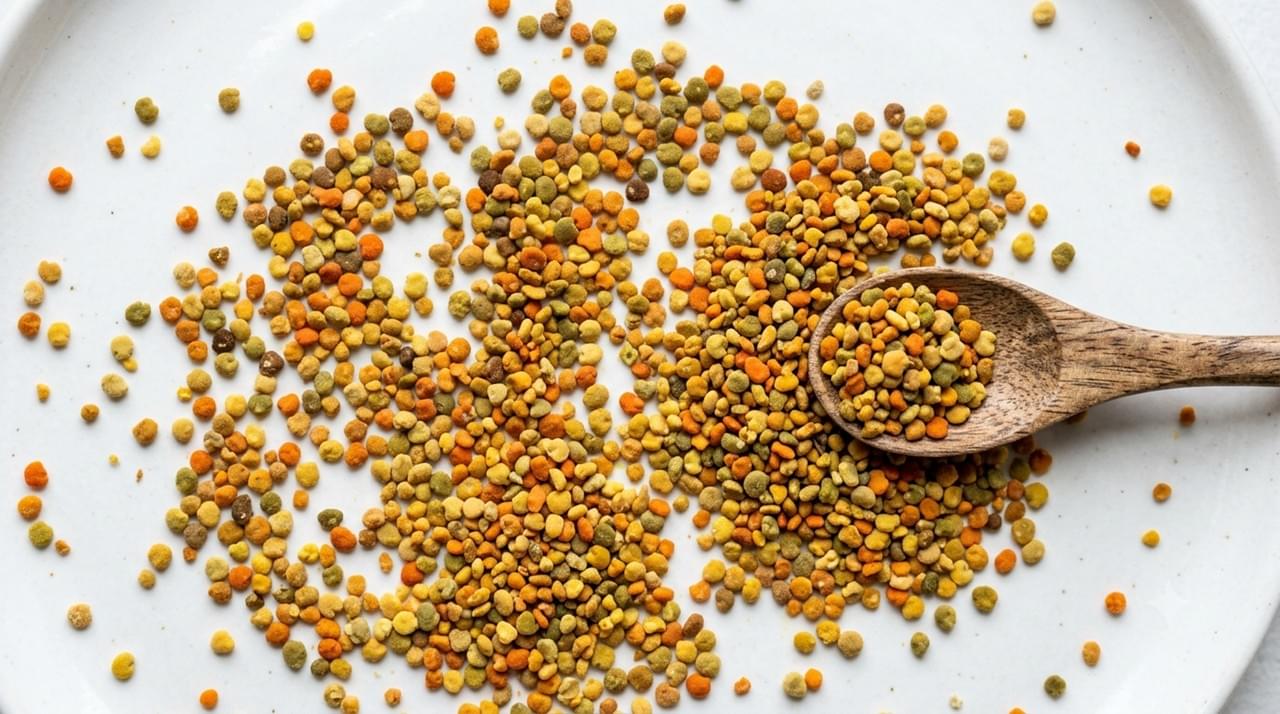
Ask anyone in the natural ingredients trade about bee pollen nutrition and you’ll hear the same thing: it’s the closest nature gets to a multivitamin in a single granule — and the data backs that up. Classified as a functional food in many jurisdictions, bee pollen carries a surprisingly broad profile: protein, B vitamins, minerals, flavonoids, and carotenoids. That’s why it’s a workhorse for supplement developers and health food manufacturers alike. 🐝
This guide covers what bee pollen contains, what the research supports, and what procurement teams should check before buying at scale. It’s part of our wider series on natural nutrition and health benefits — and if you’re weighing bee pollen supplement sourcing for a new product line, you’re in the right place.
🌼 What Makes Bee Pollen Nutrition So Impressive
Here’s the part most people don’t expect: bee pollen doesn’t come in one fixed formula. Its composition shifts with the botanical source — the plant species the bees collected from — so monofloral and polyfloral pollen deliver different profiles. That matters more than you’d think when you’re standardizing a spec.
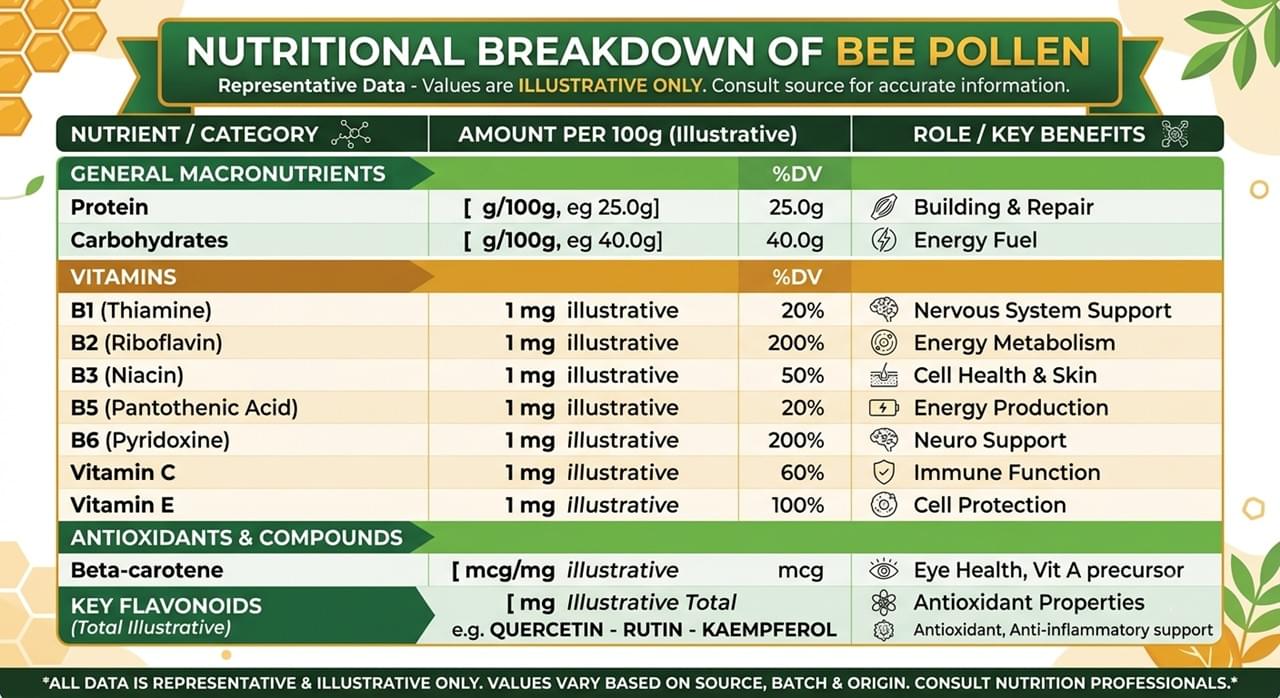
📊 The Bee Pollen Nutrition Breakdown at a Glance
For formulators, the numbers worth memorizing (approximate, per 100g dry weight):
| Nutrient | Range |
|---|---|
| Protein | 20–35g |
| Carbohydrates | 30–45g |
| Lipids | 5–10g |
| Moisture (fresh) | 15–25% |
Protein is the headline. Bee pollen protein content of 20–35% puts it in rare company: it’s one of the few plant-derived ingredients with a complete amino acid profile — all nine essential amino acids present. Studies consistently flag leucine, isoleucine, and valine (the branched-chain trio) alongside lysine and threonine — a genuinely sellable story for sports nutrition formulators.
One caveat: bee pollen nutrition varies with harvest and region, so treat the table as a range rather than a guarantee.
💊 Vitamins and Minerals in Bee Pollen Nutrition
When people talk about bee pollen vitamins and minerals, the B-complex family does most of the heavy lifting. Documented levels include:
- Vitamin B1 (thiamine) · B2 (riboflavin) · B3 (niacin)
- Vitamin B5 (pantothenic acid) · B6 (pyridoxine)
- Vitamin C — measurable, though heat-sensitive
- Vitamin E — found mainly in the lipid fractions
- Beta-carotene — the primary carotenoid and a provitamin A precursor
One thing every sourcing team should know: these vitamins degrade with heat and prolonged storage. Cold-chain handling and controlled drying aren’t nice-to-haves — they’re what keep label claims true from collection to finished product.
🌿 The Bioactive Compounds Hidden in Every Granule
Beyond the headline nutrients, a second layer of phytochemicals explains pollen’s functional-food positioning: flavonoids like quercetin and kaempferol (antioxidant and anti-inflammatory activity in vitro), phenolic acids such as caffeic and ferulic acid, phytosterols like beta-sitosterol, and enzymes that are documented in fresh pollen but fade quickly with heat.
⚙️ Processing and Quality: Keeping Bee Pollen Nutrition Intact
The journey from hive to shelf decides how much of that nutritional profile survives — and this is where most of the value, or the damage, happens.
🌡️ Fresh vs. Dried: Which Preserves Bee Pollen Nutrition Best?
Fresh pollen carries the highest enzyme activity and vitamin content, but it demands immediate cold storage and a refrigerated supply chain — so it stays mostly in direct-to-consumer markets. Dried pollen is the commercial workhorse: air-dried below 40°C, it keeps more heat-sensitive vitamins and flavonoids and is the standard B2B format. Spray-dried and freeze-dried powders cost more but offer better formulation flexibility and shelf life, with freeze-drying preserving the widest range of bioactives. In short, your drying spec is a quality decision, not a logistics one.
✅ Microbiological Safety: The Rules You Can’t Skip
Pollen picks up natural microbial loads from the field, so commercial quality standards typically demand:
- Total aerobic plate count: ≤10⁵ CFU/g
- Yeast and mold: ≤10³ CFU/g
- No pathogens: Salmonella spp., E. coli, Staphylococcus aureus absent
Facilities often use UV treatment or mild heat pasteurization to reach compliance without gutting nutritional value. If you need reference points on acceptable limits, international food standards such as those from the Codex Alimentarius are a solid place to start.
⚠️ Allergen Disclosure: A Note for Regulated Markets
Bee pollen is a recognized allergen in several regulatory frameworks. Labels in the EU, UK, and other regulated markets generally require clear disclosure, and an allergen risk assessment should be standard product-development practice. It’s an easy line item to miss — and an expensive one to discover later.
📋 The Buyer’s Checklist: Verifying Bee Pollen Nutrition at Scale
Here’s the part procurement teams actually live in. When you’re buying pollen by the ton, claims are only as good as the paperwork behind them. Every serious supplier should hand over:
- Certificate of Analysis (CoA) — nutritional composition and moisture content
- Microbiological test reports — third-party preferred
- Pesticide residue screening — pollen samples the bees’ foraging environment and can carry agricultural chemical residues
- Heavy metal analysis — lead, cadmium, arsenic, mercury
- Botanical source declaration — monofloral vs. polyfloral, plus country of origin
- Processing documentation — drying temperature and any treatment applied
If a supplier hesitates on any of these, that hesitation is your answer. Still early in your research? Our overview of the benefits and uses of bee pollen covers the wellness side, and our guide to royal jelly health benefits is a useful comparison point when weighing several bee products.
🛒 Where Bee Pollen Nutrition Shines in the Market
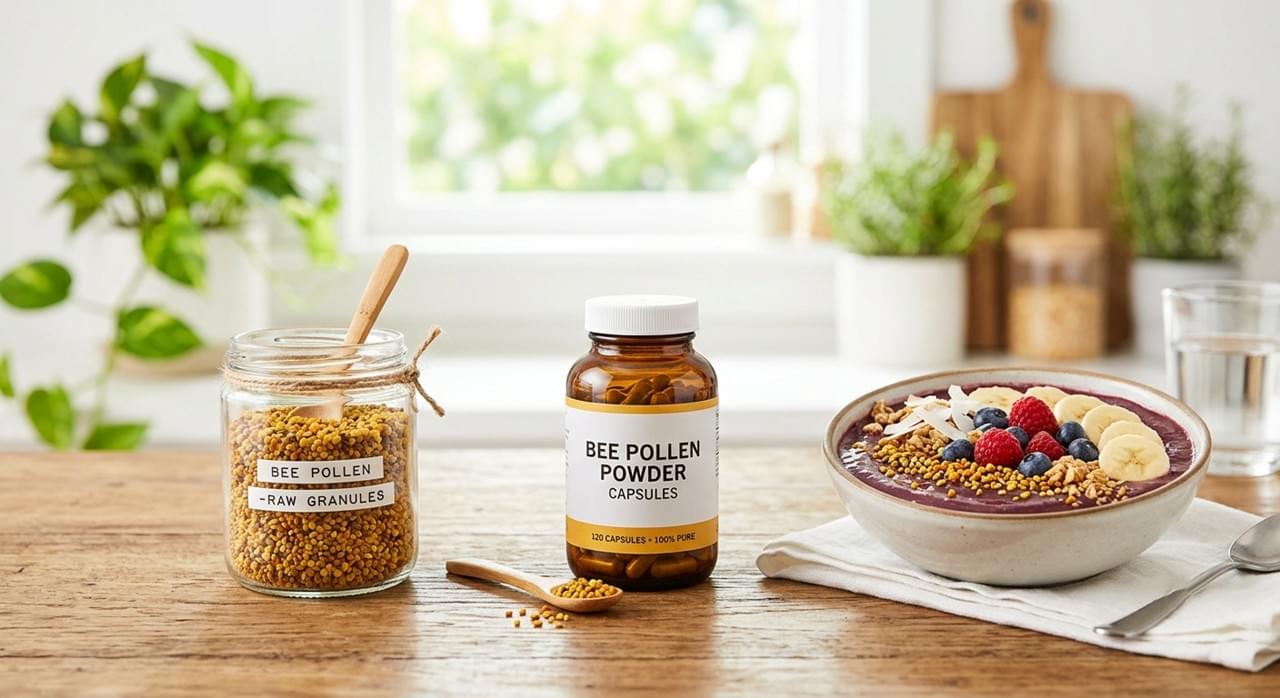
Very few naturals fit into this many categories without changing identity.
💪 Bee Pollen Nutrition in Sports and Superfood Blends
Sports nutrition leans on the amino acid and energy-metabolism story — a complete protein profile is a natural fit for performance positioning. In superfood blends, pollen pairs well with adaptogens and other bee products, adding texture and nutritional bulk to granola, energy bars, and smoothie mixes.
Dietary supplements still dominate the category; capsules and tablets are the default. But the ingredient travels further than most people assume — topical applications appear in anti-aging and skin-nutrition formulations, though regulatory classification varies by jurisdiction, so check before you commit.
💡 The Bottom Line
Bee pollen isn’t a single-purpose ingredient, and that’s exactly its appeal: complete protein, a serious B-vitamin lineup, antioxidant phytochemicals — a lot of value per gram, provided the sourcing is done right. Start with the paperwork, pick a format that fits your product goal, and you’ll have an ingredient that’s easy to market and defend.
If you’re ready to put bee pollen nutrition to work in your next formulation, Delee Honey supplies bee pollen with full quality documentation available to procurement teams. For detailed specifications and sample requests, reach out through our contact page — and browse the full bee products category to see what else fits your lineup. 🐝