










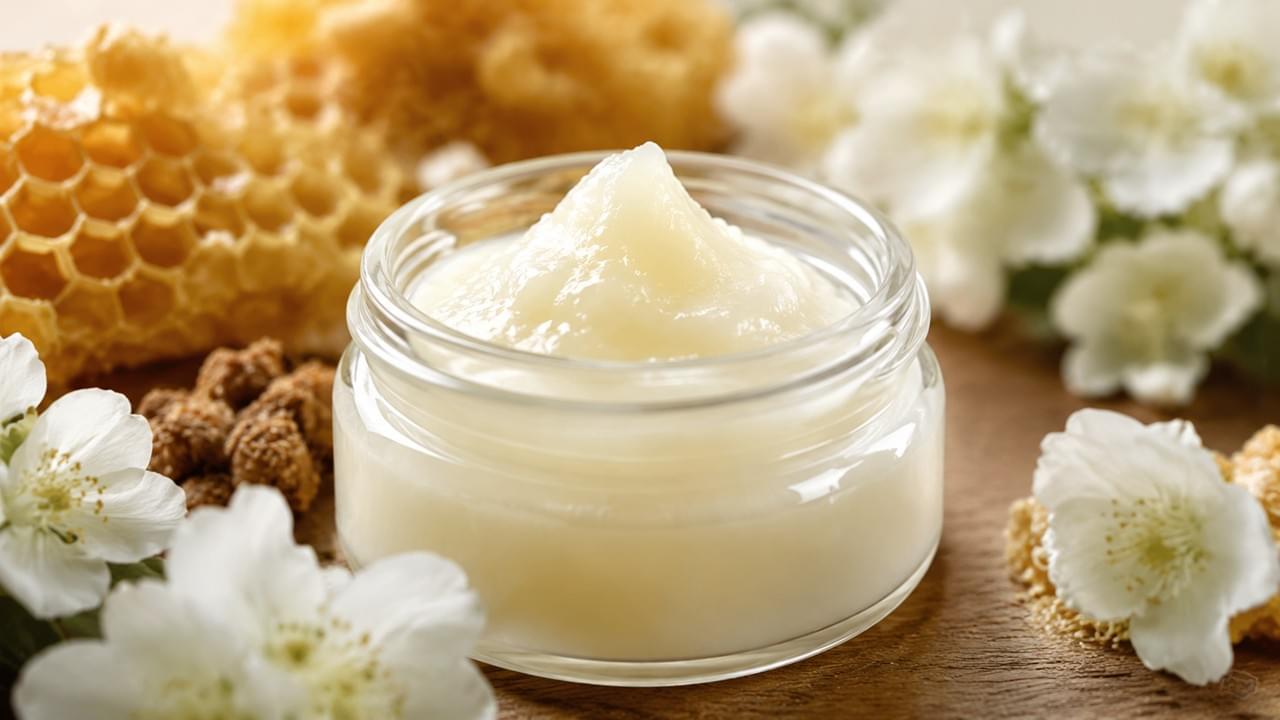
Royal jelly has fascinated people for centuries as one of the most unique natural substances produced by honeybees. Today, royal jelly health benefits are attracting renewed attention from supplement brands, functional food developers, and consumers seeking science-backed natural ingredients.
Produced exclusively by worker bees, royal jelly is the primary nutrition source for queen bee larvae and adult queen bees. This rare bee product contains proteins, fatty acids, vitamins, minerals, and other bioactive components that make it a valuable ingredient in the global wellness market.
For manufacturers and ingredient suppliers, understanding the scientific evidence behind royal jelly is essential. While research continues to explore its potential applications, responsible product development requires balancing traditional use with modern nutritional science and regulatory requirements.
🐝 What Is Royal Jelly?
Royal jelly is a nutrient-rich secretion produced by the hypopharyngeal and mandibular glands of nurse bees. Unlike honey, which originates from plant nectar, royal jelly is a biological secretion with a highly specialized nutritional profile.
Its unique composition helps explain why royal jelly has been studied extensively in nutritional science.
Key components include:
- Proteins: Approximately 50% of the dry weight, including major royal jelly proteins (MRJPs), especially MRJP1, MRJP2, and MRJP3.
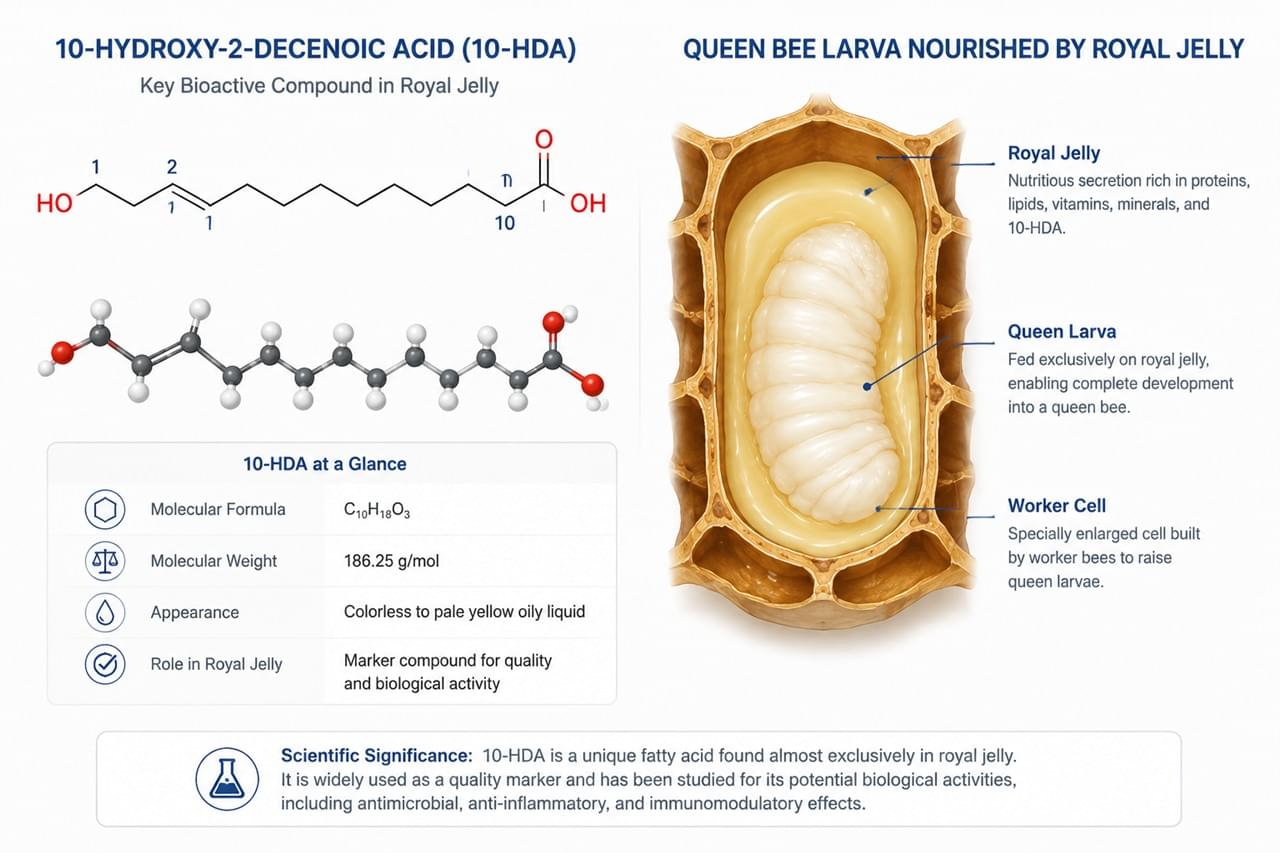
- Fatty acids: 10-hydroxy-2-decenoic acid (10-HDA) is the signature compound commonly used as a quality indicator.
- Carbohydrates: Mainly glucose, fructose, and sucrose in smaller quantities.
- Minerals: Including potassium, calcium, zinc, iron, and copper.
- Vitamins: Particularly B-complex vitamins such as pantothenic acid, pyridoxine, and biotin.
Among these components, 10-HDA plays a particularly important role in authentication. High-quality royal jelly products typically require standardized 10-HDA levels, helping manufacturers distinguish genuine products from lower-quality materials.
🔬 Royal Jelly Health Benefits Supported by Modern Research
Scientific interest in royal jelly health benefits has increased because of its diverse bioactive compounds. Current studies suggest several potential wellness applications, although more large-scale human research is still needed.
For supplement manufacturers, these findings provide valuable insights into product positioning while highlighting the importance of compliant health communication.
🛡️ Royal Jelly Health Benefits for Immune Support
One of the most researched areas is the relationship between royal jelly and immune function.
Studies have focused on major royal jelly proteins (MRJPs), especially MRJP3, which may influence immune-related pathways under experimental conditions. Research suggests that certain compounds in royal jelly may help regulate immune responses rather than simply stimulate immune activity.
A clinical study involving healthy participants who consumed royal jelly capsules for several weeks reported improvements in certain immune markers, including natural killer (NK) cell activity.
However, current evidence remains limited, and manufacturers should avoid making direct disease prevention or treatment claims. Instead, compliant positioning such as “supports healthy immune function” is generally more appropriate depending on regional regulations.
🌿 Anti-Inflammatory Potential of Royal Jelly Bioactive Compounds
The unique royal jelly bioactive compounds are another reason this ingredient continues to attract scientific attention.
Among these compounds, 10-HDA has demonstrated anti-inflammatory activity in laboratory studies. Research indicates that it may influence inflammatory pathways related to cytokine production, including IL-1β and TNF-α, through mechanisms involving NF-κB signaling.
These findings suggest that royal jelly may contribute to maintaining a balanced inflammatory response.
For functional food and supplement brands, this research creates opportunities for innovative formulations. However, marketing messages should remain scientifically accurate and aligned with food and supplement regulations in each target market.
🧠 Royal Jelly Health Benefits Related to Brain Health
Royal jelly has also gained interest for its possible neuroprotective properties.
Animal studies have shown that royal jelly supplementation may support cognitive performance and memory-related functions. Researchers have identified MRJPs and 10-HDA as potential active compounds involved in these effects.
Human research is still developing, but some clinical investigations have reported improvements in specific memory-related measurements among older adults consuming royal jelly regularly.
Although further research is required, these findings highlight royal jelly as a promising ingredient for future healthy aging and cognitive wellness products.
✨ Antioxidant Properties of Royal Jelly
Oxidative stress is closely associated with aging and overall wellness, making antioxidant ingredients highly valuable in functional nutrition.
Royal jelly demonstrates measurable antioxidant activity through its phenolic compounds, proteins, and free-radical-scavenging capacity. Laboratory tests, including DPPH antioxidant assays, have shown that royal jelly can neutralize certain reactive molecules.
The antioxidant performance may vary depending on factors such as bee source, processing method, storage conditions, and concentration level.
For manufacturers, maintaining ingredient quality throughout production and storage is critical to preserving these valuable natural properties.
🧴 Royal Jelly Supplement Manufacturing: Product Forms and Stability Considerations
For companies involved in royal jelly supplement manufacturing, choosing the right product format is one of the most important decisions. Different processing methods influence stability, shelf life, bioactive compound retention, and final product positioning.
Today, royal jelly is available in several commercial formats:
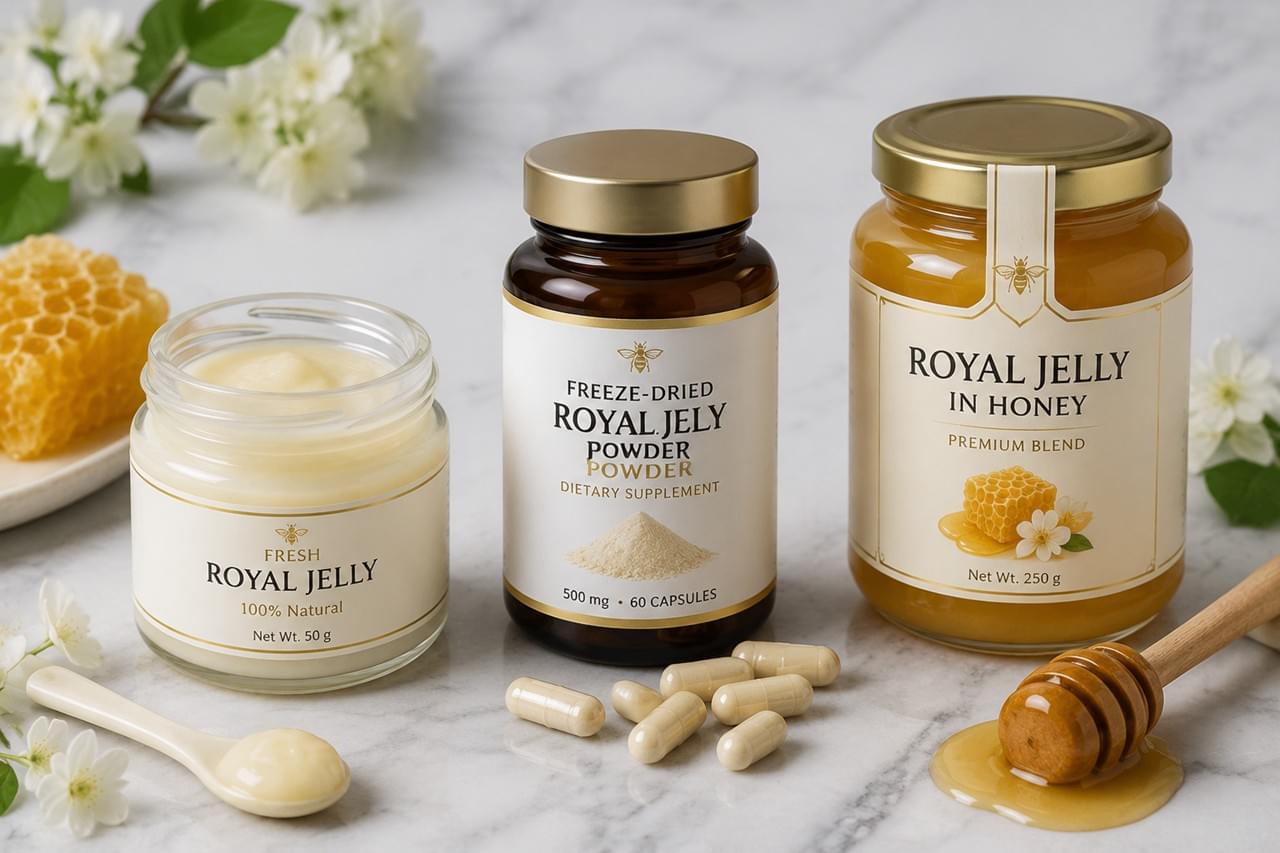
❄️ Fresh Royal Jelly
Fresh royal jelly provides the closest form to the natural bee product and maintains a high level of active compounds. However, it is highly sensitive to temperature, moisture, and storage conditions.
For long-term preservation, fresh royal jelly typically requires frozen storage, commonly at around -18°C. Maintaining a stable cold chain is essential to protect its natural characteristics and preserve its 10-HDA content.
This format is often preferred by manufacturers looking for premium positioning and minimal processing.
🌱 Freeze-Dried Royal Jelly Powder
Freeze-dried royal jelly powder is one of the most widely used formats in the supplement industry.
Through freeze-drying technology, water is removed while helping preserve important nutrients and bioactive compounds. Compared with fresh royal jelly, freeze-dried powder offers:
✅ Longer shelf stability
✅ Easier transportation
✅ Flexible formulation options
✅ Convenient dosage control
Because the drying process concentrates the material, manufacturers need to carefully calculate dosage conversion between fresh and freeze-dried forms.
For brands developing capsules, tablets, sachets, and functional nutrition products, freeze-dried royal jelly provides excellent formulation flexibility.
🍯 Royal Jelly Blended with Honey
Royal jelly combined with honey is another popular consumer format.
The honey matrix may provide additional stability benefits while creating a familiar and natural wellness product. However, manufacturers should monitor storage conditions carefully because prolonged exposure to heat and light may gradually reduce sensitive compounds such as 10-HDA.
For businesses seeking standardized royal jelly ingredients, suppliers such as Delee Honey provide different product formats, including fresh royal jelly, freeze-dried powder, and honey-blended options with documented quality specifications.
🔗 Internal reference:
Delee Honey Royal Jelly Products
📋 Quality Standards for Royal Jelly Procurement
When sourcing royal jelly for commercial applications, quality consistency is a key concern.
Unlike ordinary food ingredients, royal jelly quality can vary significantly depending on bee species, geographic origin, harvesting methods, and storage conditions.
Professional buyers should evaluate the following quality parameters:
Important quality indicators include:
- 10-HDA content:
A primary marker used to verify authenticity and quality. Fresh royal jelly commonly requires a minimum 10-HDA level of approximately 1.4%, while concentrated powders may contain higher levels. - Moisture content:
Fresh royal jelly naturally contains high moisture levels, making proper preservation essential. - Microbiological testing:
Testing should include total plate count, yeast, and mold evaluation to ensure product safety. - Heavy metal analysis:
Screening for lead, cadmium, mercury, and arsenic is essential for international food ingredient compliance. - Antibiotic residue testing:
Reliable suppliers should provide testing records confirming the absence of prohibited residues.
For global ingredient procurement, third-party laboratory documentation is strongly recommended before large-scale purchasing decisions.
International food standards and quality guidelines can also be referenced through organizations such as the Codex Alimentarius Commission.
🌍 Applications of Royal Jelly in Functional Food and Supplement Manufacturing
The growing demand for natural wellness ingredients has expanded the applications of royal jelly across multiple product categories.
For companies exploring new formulations, royal jelly can be incorporated into various health-oriented products.
💊 Capsules and Soft Gels
Capsules remain one of the most common delivery formats.
Freeze-dried royal jelly powder allows manufacturers to create standardized dosage products with improved shelf stability. Soft gels may also combine royal jelly with oils or other nutritional ingredients to create premium supplement products.
🥤 Functional Beverages
Royal jelly is increasingly used in wellness drinks, honey-based beverages, and nutritional shots.
Its natural origin and association with traditional health practices make it attractive for consumers seeking clean-label functional products.
When developing beverages, manufacturers should carefully consider flavor balance, stability, and preservation requirements.
💆 Beauty and Wellness Applications
Royal jelly is also widely explored in beauty-related formulations.
Because of its proteins, fatty acids, and antioxidant components, it is commonly used in cosmetic and personal care products targeting skin nourishment and healthy aging.
Although these applications fall outside food regulation, they represent an important opportunity for suppliers serving multiple wellness categories.
🌼 Combination Products with Other Bee Ingredients
Royal jelly is frequently combined with other bee-derived ingredients, including bee pollen and propolis.
These combinations allow brands to develop broader natural wellness concepts while utilizing the complementary characteristics of different bee products.
For companies interested in expanding their ingredient portfolio, related bee product categories can provide additional formulation opportunities.
🔗 Internal references:
- Bee Products Product Category
- C3-3: Bee Pollen Nutrition
- P3 Pillar: Natural Nutrition & Health Benefits
🌟 Final Thoughts: The Future Potential of Royal Jelly
Royal jelly continues to bridge traditional wellness practices and modern nutritional research.
Current studies highlight several promising areas, including immune support, antioxidant activity, healthy aging, and functional nutrition applications. However, the most successful products will be those that combine scientific evidence, quality control, and responsible communication.
For supplement manufacturers and functional food brands, selecting a reliable royal jelly supplier with standardized testing and transparent documentation is essential.
As consumer demand grows for natural, science-backed ingredients, royal jelly remains a valuable opportunity for companies developing innovative health products.
✨ By understanding its composition, quality requirements, and applications, businesses can create better products while delivering the authentic benefits of this remarkable bee-derived ingredient.