








Sustainable honey packaging is no longer just a nice brand story — it is becoming a line item on the purchase order. EU packaging regulations, retailer sustainability charters, and growing consumer pressure have turned recyclable packaging into a baseline expectation. For importers sourcing honey from China for European, North American, and Gulf markets, that shift changes what you should expect from suppliers — from packaging materials and recyclability to compliance documentation and responsible sourcing. 🌿
This guide covers the regulatory drivers, the materials that actually work for honey, and the documentation that backs up the claims. For the design side of packaging, start with our honey packaging design pillar.
⚖️ The Regulatory Landscape
Why Sustainable Honey Packaging Is Now a Market-Access Condition
The EU’s updated Packaging and Packaging Waste Regulation (PPWR), in force since 2024, sets binding targets that reach every jar on the shelf:
- Minimum recycled-content percentages in packaging
- Recyclability requirements for all packaging placed on the EU market
- Restrictions on certain single-use plastic formats
- Mandatory compostability for specific categories
For honey brands selling into EU retail, PPWR compliance is effectively a market-access condition, not an optional commitment. The UK’s Plastic Packaging Tax (2022) adds its own pressure on packaging with under 30% recycled content, and North American retailers — despite varied state-level rules — increasingly demand supplier sustainability documentation during vendor qualification, often benchmarked against GFSI-recognized food safety and quality schemes.
🌿 Eco-Friendly Materials That Work for Honey
Glass: The Foundation of Sustainable Honey Packaging
Ask buyers what an eco friendly honey jar looks like, and the answer starts with glass — for good reason:
- Infinitely recyclable: Glass recycles repeatedly with zero quality degradation
- Chemically inert: Nothing migrates into the honey, ever
- Consumer-trusted: Glass consistently scores highest in sustainability perception surveys
Better still, sustainability and premium positioning reinforce each other here — the material that reads “natural” on shelf is also the one that recycles forever.
Labels, Closures, and Inserts: Finishing the Sustainable Honey Packaging System
The jar is only the start. Three components complete a credible system:
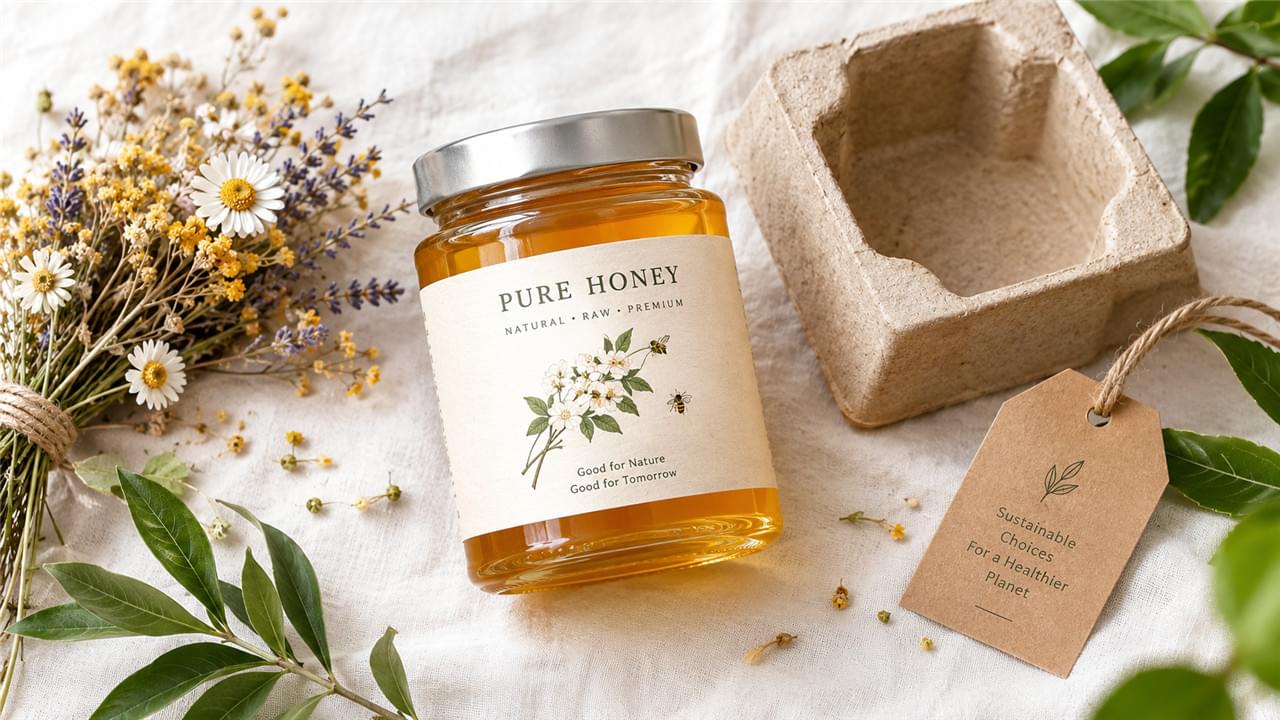
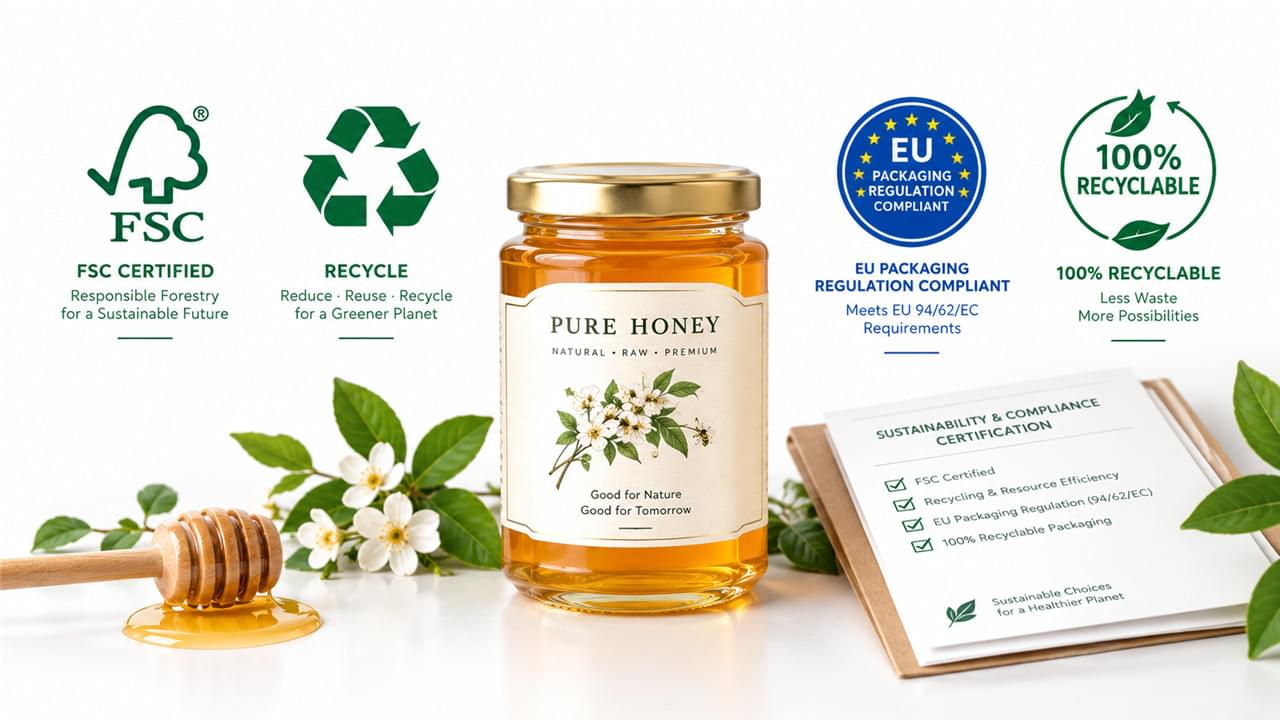
- FSC-certified paper labels printed with soy-based or water-based inks — premium grocery buyers increasingly write label material specs directly into supplier requirements
- Aluminum or tin-plate closures replacing plastic caps — highly recyclable, high recycled content, and they simply look better on a premium jar
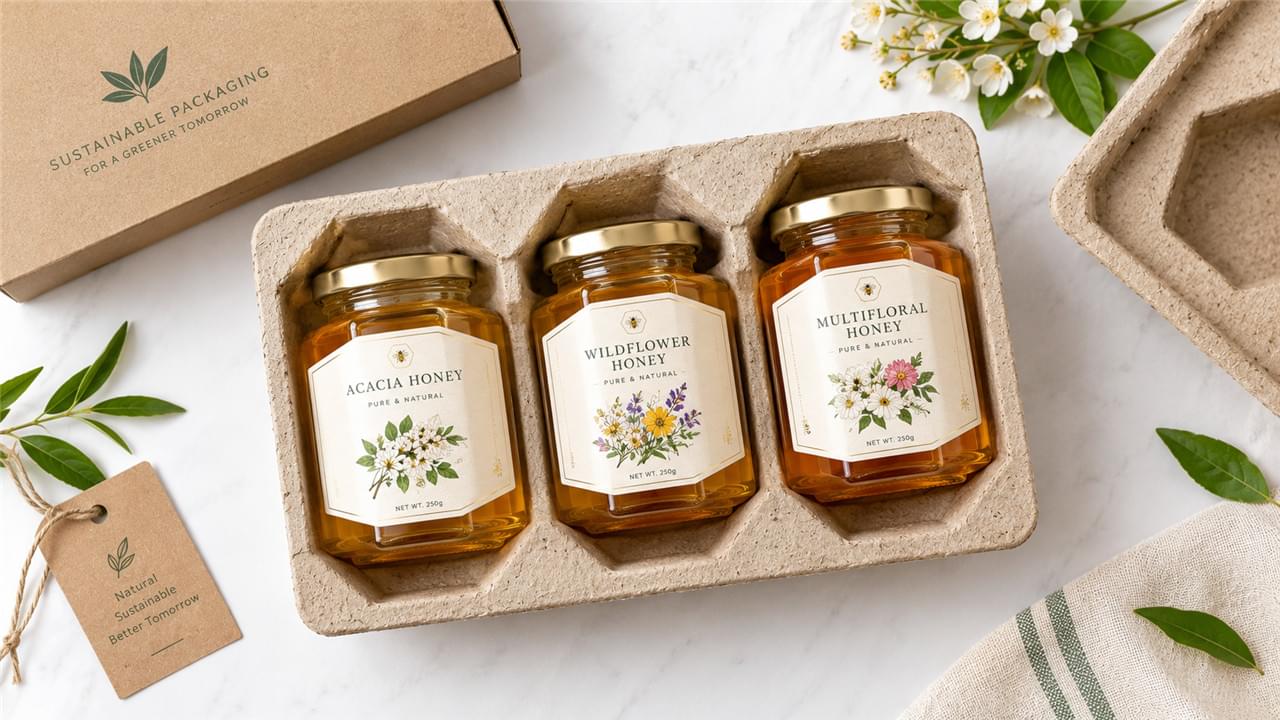
- Molded pulp and corrugated inserts replacing foam or PET trays — recyclable, with shock absorption that protects glass through logistics
Gift programs feel this shift most. Our guide to honey gift box design shows how pulp inserts and paper-based rigid boxes translate into gifting.
Reduced Formats: Sustainable Honey Packaging Beyond Recycling
Recycling is only half the answer — some markets are cutting packaging at the source:
- Refill pouches: Flexible honey pouches for refilling glass jars, slashing per-use packaging weight
- Larger sizes: Fewer packages per kilo of honey sold
- No outer carton: Naked glass jars with a minimal label for select retail formats
Each option suits different channels, which is why green honey packaging options deserve a deliberate decision rather than a default.
🤝 Delee Honey’s Approach to Sustainable Honey Packaging
Delee Honey works with importers and brand owners to build packaging programs that pass both retailer scrutiny and regulation:
- Glass jar supply in multiple formats with recyclability certification documentation
- FSC-certified label paper sourcing support for private label programs
- Aluminum closure options across standard jar formats
- Molded pulp insert procurement for gift box programs
- Packaging documentation for EU PPWR compliance review and retailer sustainability questionnaires
Building or updating a program for EU, UK, or North American markets? Browse the packaging formats we support, then contact our export team at deleehoney.com/about-us/ — we’ll map the documentation requirements to your target market before you commit. 🐝