











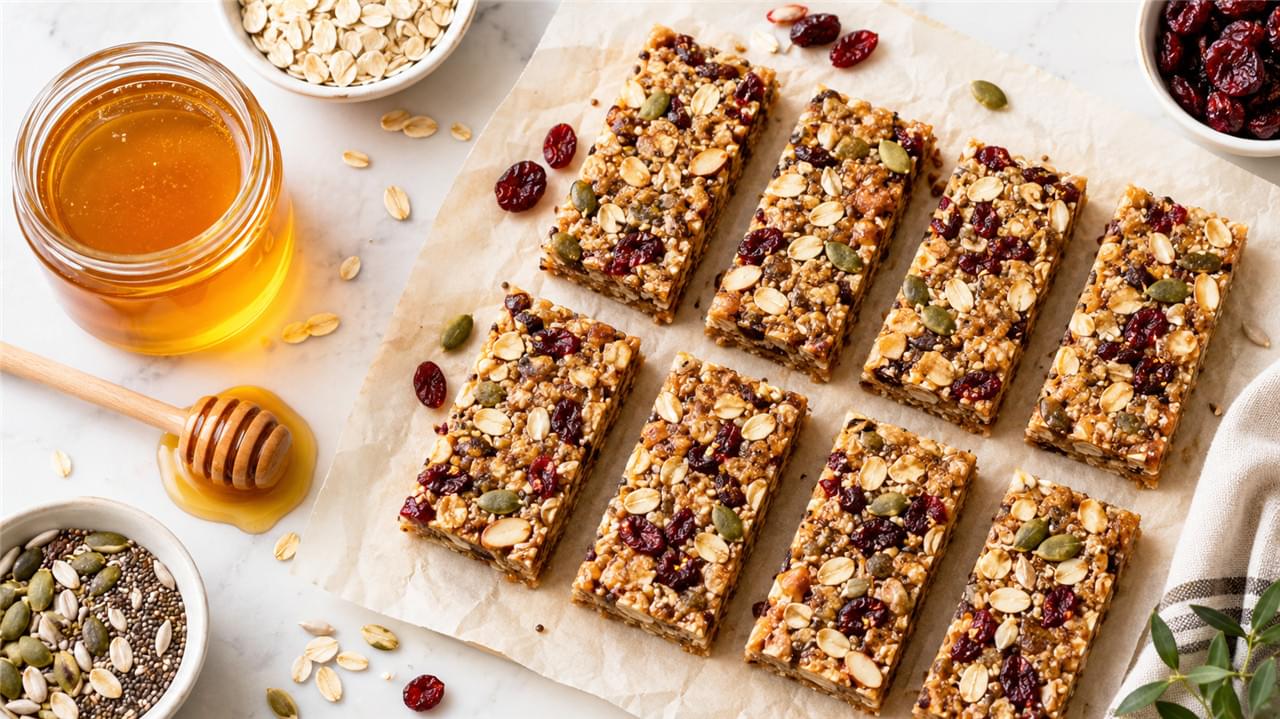
Ask anyone who’s launched a snack brand: buyers in this category read the label before they read the price. That’s why the honey energy bar keeps winning shelf space — honey is simultaneously a sweetener, a natural binder, a moisture regulator, and a clean-label signal health-conscious shoppers actually recognize. Few ingredients do four jobs at once. 🍯
This guide covers the practical side of that story, from base formulation to scale-up. It’s part of our series on honey culinary applications, where you can compare how honey performs across bakery, beverages, and functional food.
🔗 Why Honey Works as an Energy Bar Binder
Why Every Honey Energy Bar Starts With the Binder
In no-bake formulations, the binder is the ingredient that holds everything together — and honey’s physicochemistry makes it exceptionally good at the job:
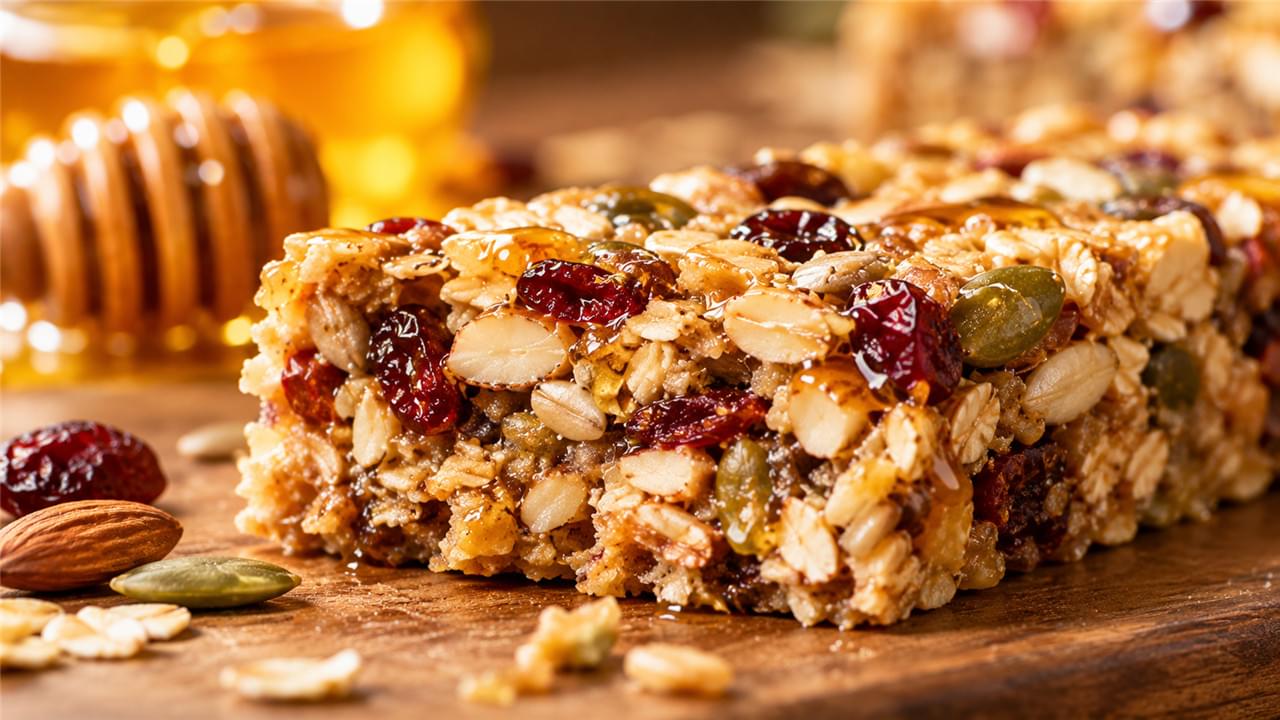
- High viscosity: Honey’s natural thickness coats dry ingredients — oats, nuts, seeds, dried fruit — and sets into a firm but chewy structure at room temperature. It’s the classic honey binder for granola bars, and it still outperforms most syrups on texture.
- Hygroscopicity: Honey attracts and retains moisture, keeping the soft, chewy bite consumers associate with a premium honey energy bar — and slowing the slide toward dry and brittle over shelf life.
Crystallization and sweetness round out the picture:
- Controlled crystallization: The fructose-to-glucose ratio decides the behavior. High-fructose honeys (acacia) stay liquid longer for smoother texture and longer processing windows; higher-glucose honeys set firmer, which helps bars hold their shape at ambient temperatures.
- Flavor and sweetness: Honey runs roughly 25% sweeter than sucrose by weight — as our honey vs. artificial sweeteners comparison shows, that means less total sweetener for the same target sweetness, with a better label story.
If clean label energy bar ingredients are your brief, this is the easiest win on the list: one recognizable ingredient doing four jobs.
📊 Building the Base: Recipe and Processing
The No-Bake Honey Energy Bar Base Recipe
Here’s a foundational natural honey snack bar recipe for commercial reference:
| Ingredient | Percentage (by weight) |
|---|---|
| Rolled oats (or puffed grain base) | 35–40% |
| Honey | 20–25% |
| Nut butter (almond, peanut, or sunflower) | 15–20% |
| Dried fruit (dates, cranberries, raisins) | 10–15% |
| Seeds (chia, flax, pumpkin) | 5–8% |
| Salt | 0.3–0.5% |
| Vanilla extract (optional) | 0.5–1% |
Processing notes:
- Combine honey and nut butter, heat gently to 45–50°C for a uniform mixing viscosity
- Add dry ingredients and mix thoroughly so every particle gets a complete honey coating
- Press into lined trays at 1–2 cm depth; set chilled or at room temperature depending on the formula
- Cut to size and wrap individually; shelf-stable at 20–25°C for 8–12 weeks depending on moisture content
🌼 Matching Varietals to Your Honey Energy Bar Line
Acacia honey: The pick for light-colored, mild-flavored bars where the honey note should be clean, not dominant. Its high fructose content also keeps the texture soft and chewy across shelf life.
Wildflower honey: The cost-effective workhorse for mass-market SKUs. Amber color and moderate floral flavor suit mixed-ingredient bars where the overall profile is already complex.
Dark varietal honey (chestnut or buckwheat): Built for specialty honey energy bar SKUs chasing bold flavors. Pairs naturally with dark chocolate, espresso, or robust dried fruits.
If you also run a bakery line, our guide on honey in healthy baking covers how the same varietal logic plays out in dough and batter systems.
⚙️ From Pilot to Production
Scaling Honey Energy Bar Production Without Losing Texture
Moving from prototype to full production is where honey energy bar projects get tested:
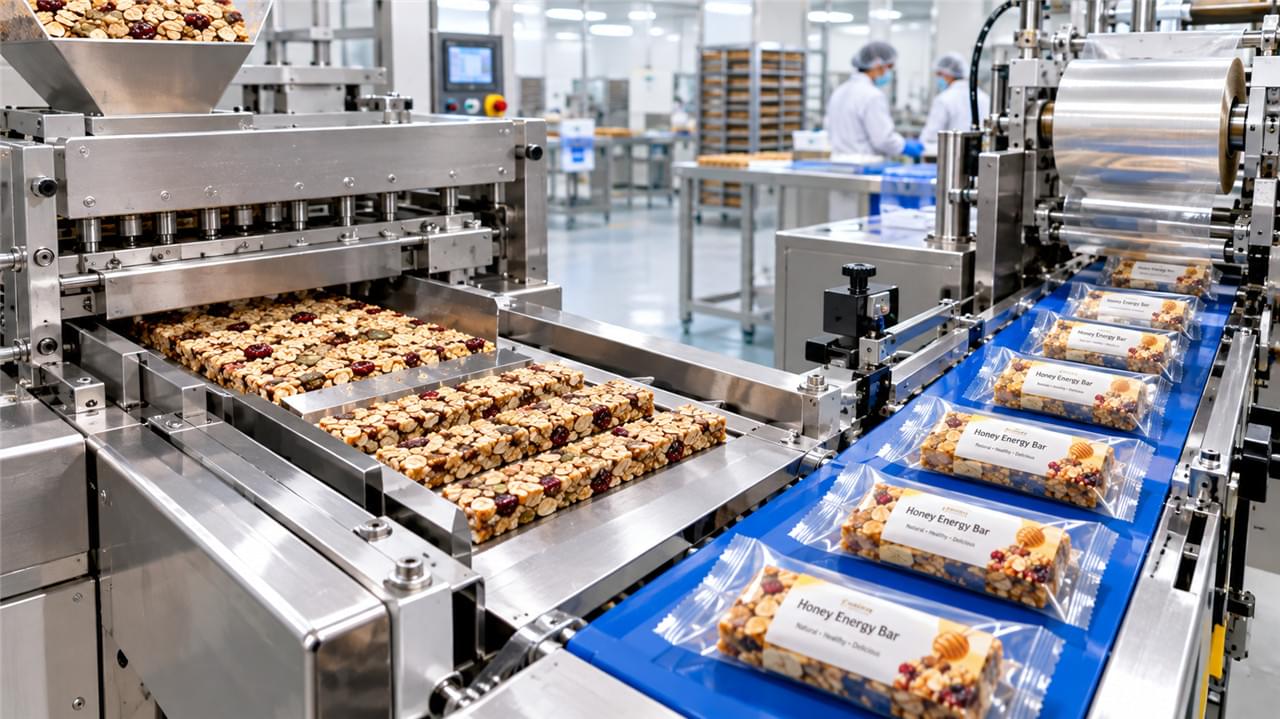
- Temperature management: Hold honey at the right viscosity for consistent metering — jacketed tanks or temperature-controlled pumping are standard. Overheating (>60°C) degrades enzymatic activity and accelerates HMF formation, so treat the ceiling as a hard limit.
- Mixing uniformity: Complete honey coating of every dry particle depends on mixing sequence. Adding dry ingredients progressively, not in one dump, measurably improves coating uniformity.
Two more production realities worth budgeting for:
- Cutting and portioning: Chilled bars cut cleaner and more consistently than room-temperature product — most commercial lines run a chilling tunnel ahead of the cutting station.
- Shelf life testing: Formal shelf life claims need accelerated shelf life testing (ASLT). Track water activity, peroxide value (critical with nut butters), texture, and sensory attributes.
📋 Sourcing and Specifications
Honey Energy Bar Sourcing Specs That Protect Shelf Life
Snack manufacturers should lock these parameters into every honey contract:
- Moisture content: Below 18% preferred for shelf-stable bars; lower moisture cuts water activity and extends microbiological shelf life
- Diastase activity: Higher values signal fresher, minimally-processed honey
- HMF content: A low baseline (below 10 mg/kg) leaves processing headroom; finished-goods limits follow the Codex honey standard
- Consistency: Batch-to-batch organoleptic consistency (color, flavor) is what keeps finished bars uniform
Delee Honey supplies bulk honey in 300kg drums and IBC containers built for commercial snack operations, with third-party laboratory analysis available for every production batch. Explore the bulk packaging options or contact our export team for custom specifications and pricing. 🐝


