











Ask any food formulator about the natural sweetener alternative debate and you’ll hear the same thing: clean label has turned sweetener choice into a strategic decision, not a last-minute tweak. Shoppers across Western Europe, North America, and premium Asian markets scan ingredient lists and walk away from anything they can’t pronounce. 🍯
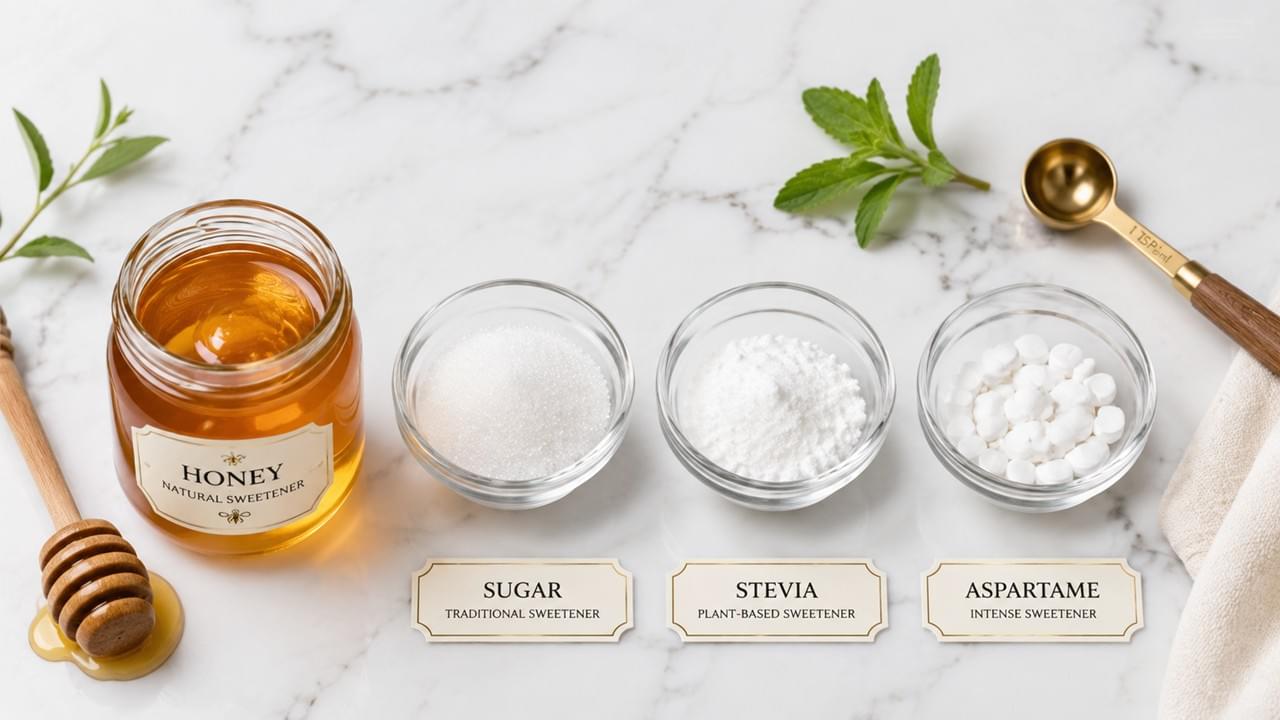
This guide compares honey against the usual lineup — sucrose, high-fructose corn syrup, stevia, aspartame, and acesulfame-K — on the criteria that actually drive B2B decisions: function, glycemic impact, regulation, and total cost. It’s part of our wider series on natural nutrition and health benefits, and if you’re weighing honey vs artificial sweeteners for a reformulation, you’re in the right place.
🌱 The Natural Sweetener Alternative Landscape
Clean label isn’t a regulated standard; it’s a perception with commercial teeth. Market research keeps pointing the same way: consumers prefer shorter, recognizable ingredient lists, and they reward brands that deliver them with premium pricing. For a clean label sweetener comparison, honey is the benchmark — a single-ingredient product with centuries of documented use and stronger natural associations than any industrial option.
⚖️ Honey vs Artificial Sweeteners: The Comparison Table
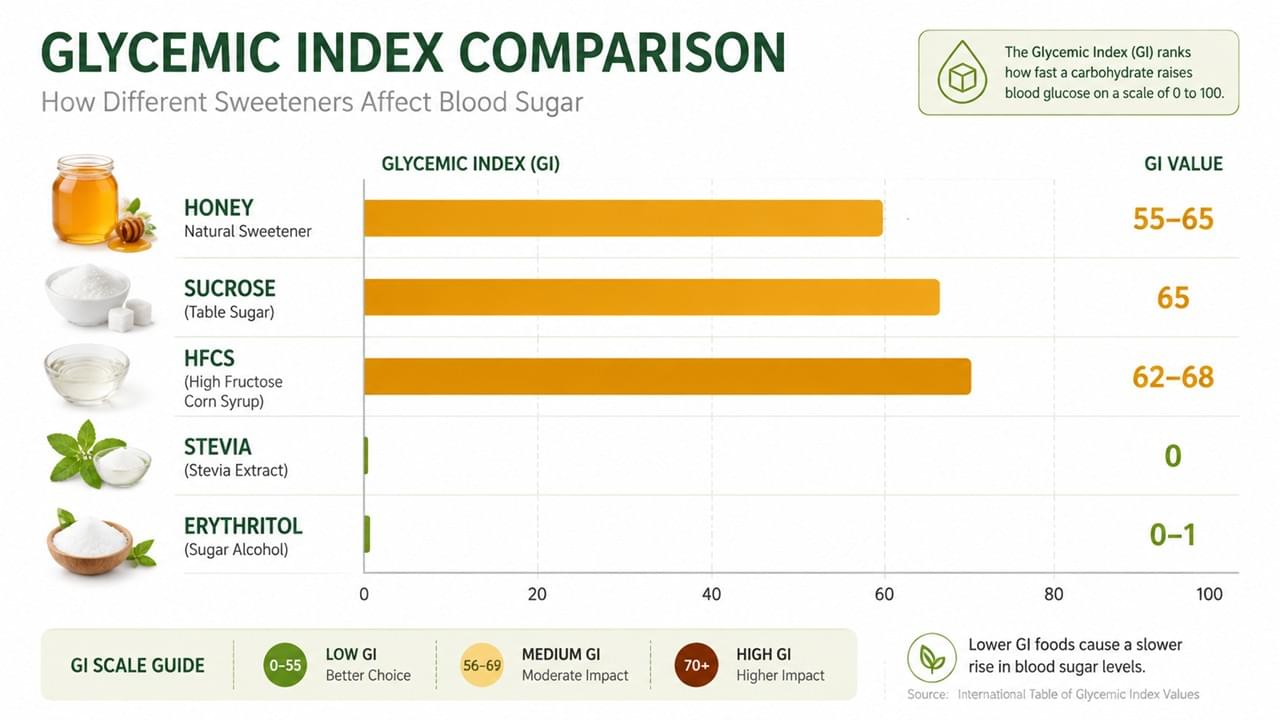
Here’s the landscape in one glance. GI values are approximate and shift with variety and processing, but the pattern is a useful screening tool.
| Sweetener | Type | GI | Clean Label | Functional Notes |
|---|---|---|---|---|
| Honey | Natural | 55–65 | Strong positive | Humectant, antimicrobial, flavor complex |
| Sucrose (table sugar) | Refined | 65 | Neutral | Standard baking reference |
| High-fructose corn syrup | Industrial | 62–68 | Negative | Texture, shelf life |
| Stevia (steviol glycosides) | Natural extract | 0 | Moderate positive | Zero-calorie, slight aftertaste |
| Aspartame | Synthetic | 0 | Negative | Heat instability, regulatory scrutiny |
| Acesulfame-K | Synthetic | 0 | Negative | Often used in combination |
| Erythritol | Sugar alcohol | 0–1 | Moderate positive | Cooling effect, digestive sensitivity |
Notice what the table says about the natural sweetener alternative conversation: honey is the only option that pairs a moderate GI with real functional payload. Synthetic zero-calorie sweeteners bring the numbers down, but they also bring aftertaste, heat instability, or a regulator’s eye.
🔧 Honey’s Functional Advantages in Manufacturing
Beyond sweetness delivery, honey earns its keep on the production line. These four properties are where synthetic sweeteners simply can’t follow.
💧 Humectancy: A Natural Sweetener Alternative That Keeps Products Fresher
Honey’s high fructose and glucose content — combined with its hygroscopic nature — makes it an effective humectant in bakery, confectionery, and snacks. Products formulated with honey typically hold moisture longer and show extended shelf life versus sucrose-equivalent recipes. That’s a functional argument that shows up directly in your cost line.
🎨 Flavor Complexity: Natural Sweetener Alternative Honey Goes Deeper
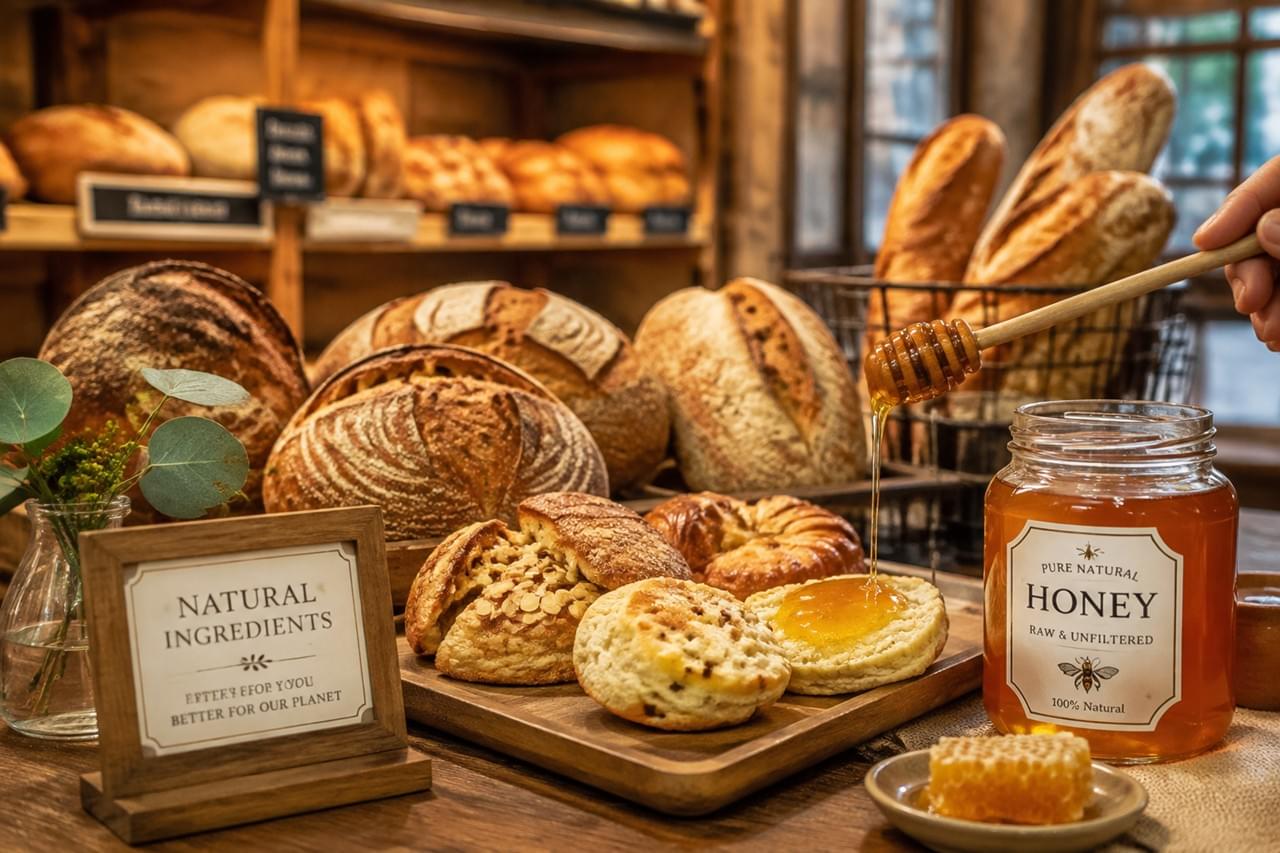
Single-note sweeteners do one job. Honey carries a flavor profile shaped by floral origin. Acacia honey is mild and neutral, ideal for delicate applications, while dark honeys like buckwheat bring bold, complex notes that belong in artisanal breads, marinades, and specialty confections. Curious how far this versatility goes? Our breakdown of 7 powerful bioactive compounds in honey is a good next read.
🔥 Maillard Reaction: The Baking Edge of a Natural Sweetener Alternative
Honey’s free fructose and glucose promote Maillard browning at lower temperatures than sucrose. In bakery applications that means better color and aroma development — but it also means adjusting baking temperatures and times, and factoring that change into your specifications.
🛡️ Natural Preservation: A Hidden Bonus of This Natural Sweetener Alternative
Honey’s antimicrobial activity — driven by hydrogen peroxide, low water activity, and low pH — contributes mild preservation in certain food systems. It won’t carry a preservative system on its own, but in some formulations it can reduce what you need to add. Our science-backed review of honey benefits digs into the mechanisms if you want the evidence.
📉 Glycemic Index: Where Honey Beats Refined Options
The honey glycemic index sits around 55–65, depending on the fructose-to-glucose ratio — below sucrose (~65) and clearly below high-fructose corn syrup. Monofloral honeys with more fructose, like acacia, tend toward the lower end. One honest caveat: honey alone won’t get you a low-GI claim; that needs jurisdiction-specific substantiation. But as a natural sweetener alternative in a reformulation, it moves the needle in the right direction.
📜 Regulatory Status: Why Natural Beats Synthetic
Regulatory math is quietly decisive. Honey is a natural food ingredient across major frameworks — no additive status or E-number labeling in the EU, GRAS in the US, and well-established halal and kosher certification pathways. The Codex Alimentarius standard for honey (CXS 12-1981) gives you a globally recognized reference point. Synthetic sweeteners, by contrast, face ongoing reassessments in multiple markets; aspartame, sucralose, and acesulfame-K have all seen restrictions or mandatory labeling after safety reviews. From a supply-chain risk perspective, natural wins.
💰 Cost in B2B Procurement: The Real Math
Honey carries a price premium over refined sugar and most industrial sweeteners — nobody’s pretending otherwise. But the honest calculation for a reformulation extends beyond the ingredient line:
- Functional value: fewer added humectants, flavor enhancers, or preservatives needed
- Labeling value: clean-label positioning supports premium pricing in retail channels
- Regulatory durability: natural ingredients carry lower regulatory-change risk
Run those three lines together and the natural sweetener alternative case gets stronger the longer your product lives on shelf.
Delee Honey supplies bulk and industrial-grade honey — acacia, linden, mixed flower, and specialty varieties — with consistent quality specifications. For bulk pricing, reach out through our contact page, and browse the acacia honey product category to see what monofloral sourcing looks like. 🍯